
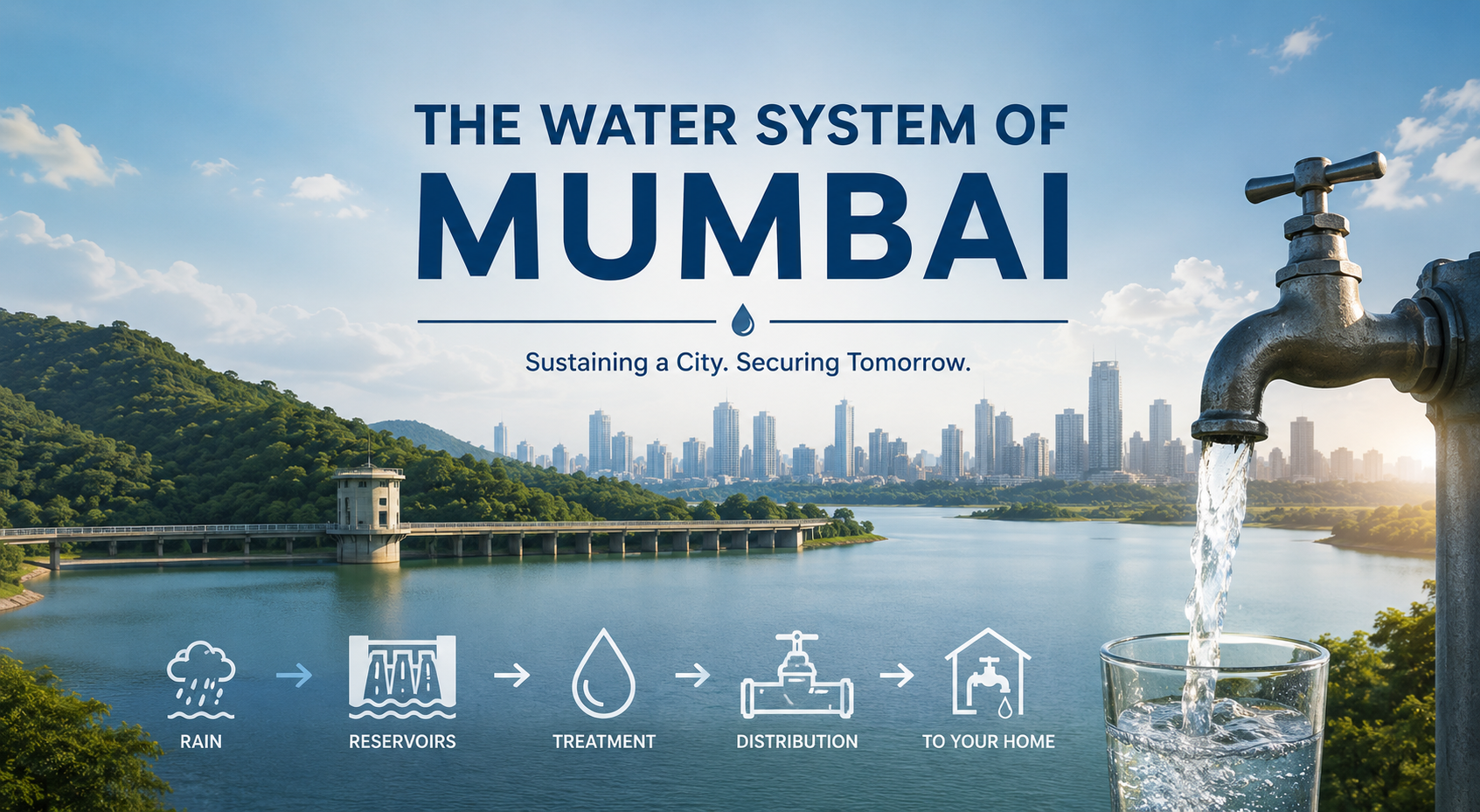
Mumbai’s water supply system is one of the largest urban networks in India, providing drinking water to millions of residents every day. Despite receiving abundant rainfall during the monsoon, the city continues to face increasing pressure on its water resources due to rapid urbanisation, population growth and changing climate patterns. Ensuring that water demand is met throughout the year has become one of Mumbai’s biggest civic challenges, requiring careful planning, infrastructure upgrades and long-term conservation measures.
In This Article
Population Growth: The Driving Force Behind Water Demand
Mumbai’s water supply system has expanded continuously to keep pace with the city’s remarkable population growth. In the mid-19th century, when Vihar Lake was commissioned in 1860, Bombay had a population of less than one million. Today, the Brihanmumbai Municipal Corporation (BMC) area is home to over 12 million people, while the Mumbai Metropolitan Region (MMR) supports a population exceeding 26 million. Rapid urbanisation, migration, industrial development and commercial growth have significantly increased the demand for drinking water. Besides households, water is required by offices, hotels, hospitals, educational institutions, industries and millions of daily commuters who travel to the city for work. Although Mumbai’s population growth within the municipal limits has slowed in recent years due to limited land availability and redevelopment, water demand continues to rise because of increasing commercial activity, improved living standards and the expanding metropolitan region. Meeting these growing requirements while ensuring an uninterrupted supply remains one of the biggest challenges for Mumbai’s water management authorities.
Growing Demand for Water
Mumbai’s population has grown rapidly over the past century, increasing the demand for drinking water in homes, offices, industries, hospitals and commercial establishments. Besides the resident population, millions of daily commuters also add to the city’s water requirement. Lifestyle changes, improved sanitation and expanding urban infrastructure have further increased per capita water consumption.
The Brihanmumbai Municipal Corporation (BMC) estimates the city’s total daily water requirement at around 4,400–4,500 million litres per day (MLD), and this figure is expected to rise further as the city continues to grow.
Current Water Supply
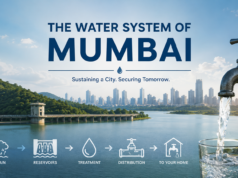
Mumbai currently receives approximately 3,950–4,000 MLD of treated drinking water from seven reservoirs—Bhatsa, Middle Vaitarna, Upper Vaitarna, Modak Sagar, Tansa, Vihar and Tulsi. Water is supplied after treatment through an extensive transmission and distribution network managed by BMC.
Although this supply meets most essential requirements under normal conditions, it remains lower than the city’s estimated daily demand, particularly during years of poor monsoon rainfall.
The Demand-Supply Gap
The difference between the city’s water demand and available supply is commonly referred to as the demand-supply gap. During years of good rainfall, reservoir storage generally remains sufficient to avoid major shortages. However, if monsoon rainfall is below normal or reservoirs fail to fill adequately, BMC may introduce water cuts to conserve available supplies until the next monsoon.
Bridging this gap requires not only developing new water sources but also improving the efficiency of the existing supply system.
Water Losses and Leakages
Not all treated water reaches consumers. A portion is lost due to ageing pipelines, leakages, illegal connections and operational losses, collectively known as Non-Revenue Water (NRW). Reducing these losses is one of the most cost-effective ways of increasing available water without constructing new reservoirs.
BMC has been replacing old pipelines, strengthening leak detection systems and modernising its distribution network to minimise such losses.
Dependence on the Monsoon
Mumbai’s reservoirs depend almost entirely on rainfall received during the Southwest Monsoon between June and September. If the catchment areas receive good rainfall, reservoir storage usually remains adequate for the following year. Conversely, weak monsoon seasons may reduce storage levels, increasing the possibility of water conservation measures.
For this reason, reservoir levels are closely monitored throughout the monsoon, and their status often becomes a key indicator of Mumbai’s future water availability.
Meeting Future Water Needs
Meeting Mumbai’s future water demand requires a combination of new infrastructure and better water management. Proposed projects such as the Gargai Dam and Pinjal Project aim to augment the city’s water supply, while desalination is being explored as an additional source during periods of scarcity.
At the same time, reducing transmission losses, promoting rainwater harvesting, recycling treated wastewater and encouraging responsible water use will play an equally important role in ensuring long-term water security.
Frequently Asked Questions
How much water does Mumbai require every day?
Mumbai’s estimated daily water requirement is around 4,400–4,500 MLD, depending on demand and population.
How much water does Mumbai currently receive?
The city receives approximately 3,950–4,000 MLD from its seven reservoirs under normal conditions.
Why does Mumbai sometimes face water cuts?
Water cuts are generally introduced when reservoir storage is lower than expected due to weak monsoon rainfall or reduced inflows.
Can reducing leakages improve water availability?
Yes. Reducing losses from ageing pipelines and illegal connections can significantly increase the amount of water available without developing new sources.
Will new projects solve Mumbai’s future water needs?
Projects such as Gargai, Pinjal and desalination will strengthen Mumbai’s water security, but water conservation and efficient management will remain equally important.
Explore More About Mumbai's Water Supply System
Continue learning about how Mumbai stores, treats and supplies drinking water through our detailed guides.
Sources
- Brihanmumbai Municipal Corporation (BMC) – Water Supply Department.
- BMC Environment Status Reports.
- Government of Maharashtra – Water Resources Department.
- Central Water Commission.
- Ministry of Jal Shakti, Government of India.