
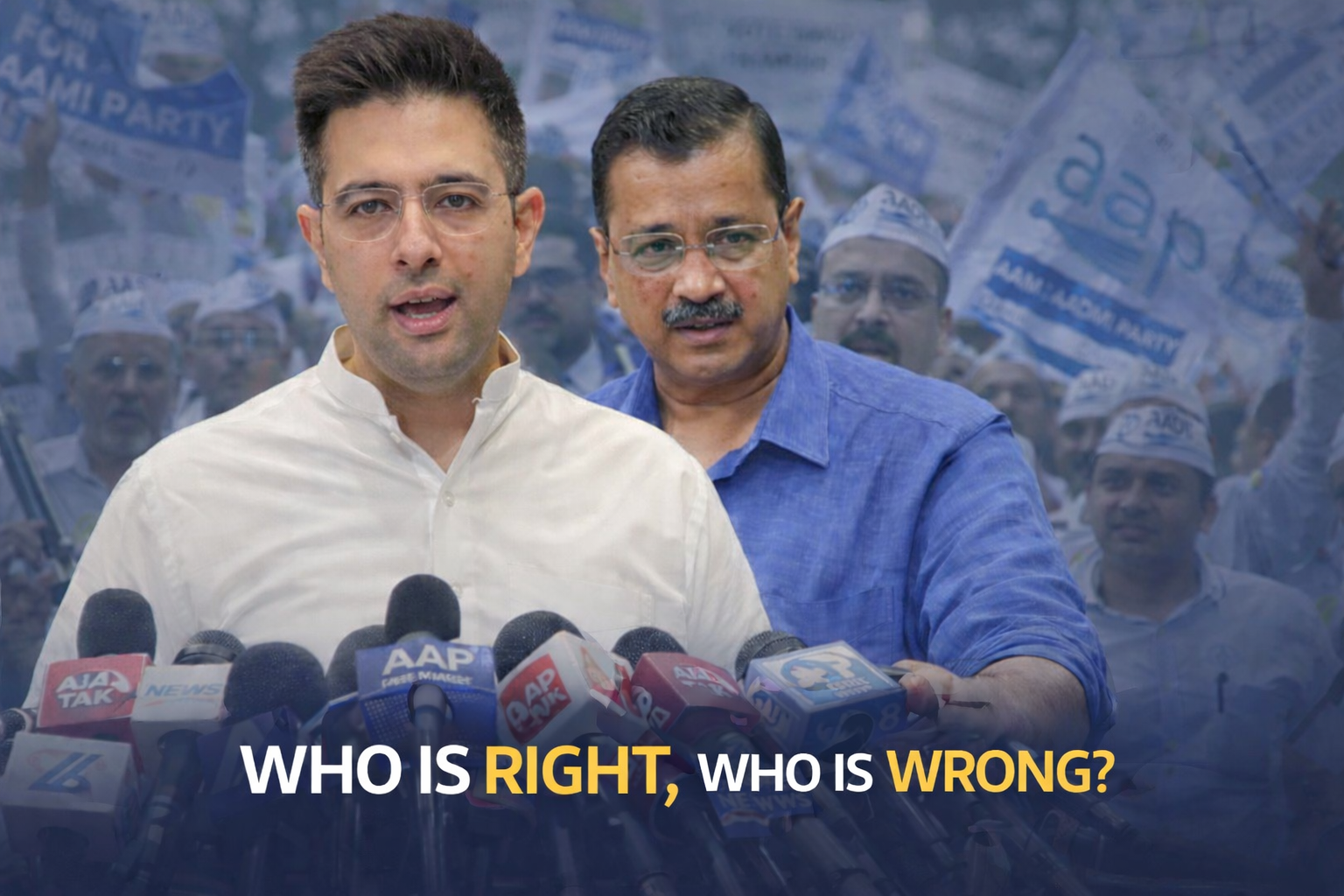
The article relating to this topic is chosen since Raghav Chadha’s had approach of raising issues concerning the common man. So now what to expect next where where people got closely connected with political figure. So same is the story with most of the parties. It is an attempt that people should think rationally and be neutral to make any Political leaders accountable.
In recent developments involving Raghav Chadha and the Aam Aadmi Party (AAP), the situation has sparked debate among supporters, critics, and neutral observers alike.
Rather than taking sides, it is important to examine the issue through a rational lens—where both Raghav Chadha and AAP could be either justified or mistaken, depending on perspective.
Understanding the Core Issue
Raghav Chadha has been a prominent face of AAP, known for his articulate presence in Parliament and his close association with the party leadership. However, recent actions—particularly his questions in the Rajya Sabha and subsequent reactions—have created a perception of divergence from party lines.
This raises a fundamental question is that whether this a case of individual conviction clashing with party discipline, or a misalignment in communication and strategy?
Where Raghav Chadha Could Be Right
1. Duty Towards Public Accountability
As a Member of Parliament, Chadha has a constitutional responsibility to raise issues that matter to the public. If his questions in the Rajya Sabha were driven by genuine concern, then his actions align with democratic principles rather than party loyalty.
2. Individual Integrity Over Party Line
In politics, there are moments when personal conviction must take precedence over collective positioning. If Chadha believed that raising certain issues was necessary, then remaining silent would have been a compromise of integrity.
3. Internal Differences Are Natural
No political party is free from internal disagreements. Expressing a different viewpoint does not necessarily imply disloyalty—it can also indicate maturity within a democratic setup.
Where Raghav Chadha Could Be Wrong
1. Lack of Visible Consistency
His relatively low-key stance over the past two years, especially in strongly opposing the ruling government, makes the sudden assertiveness appear abrupt. This creates doubts about timing and intent.
2. Bypassing Internal Communication
If these concerns were not first discussed within party forums, then raising them publicly could be seen as undermining party discipline.
3. Dual Position Conflict
Continuing as both a Rajya Sabha member representing the party and simultaneously challenging it publicly creates a contradiction. Political ethics often demand clarity—either alignment or separation.
4. Switching To Other Political Party
A final aspect that cannot be ignored is the possibility of future political alignment. If, at a later stage, Raghav Chadha chooses to join another political party, it could raise questions about whether his recent actions were entirely driven by principle or strategically positioned. Such a move may create a perception that the sequence of events—public divergence, disciplinary response, and eventual shift—was anticipated, making it easier to justify the transition as a compulsion rather than a choice. While this remains speculative at present, the credibility of his current stance will ultimately be judged in light of his future decisions.
Where AAP Could Be Right
1. Importance of Party Discipline
Political parties function on coordinated strategy. If individual leaders act independently on sensitive matters, it can weaken the party’s collective messaging.
2. Expectation of Internal Resolution
AAP may expect that any disagreement should first be addressed internally. Public divergence can be perceived as damaging to organizational cohesion.
3. Maintaining Strategic Consistency
If Chadha’s actions were not aligned with the party’s broader political approach, the leadership may see corrective measures as necessary to maintain consistency.
Where AAP Could Be Wrong
1. Suppressing Internal Dissent
If the party discourages open discussion or fails to accommodate differing viewpoints, it risks appearing rigid rather than democratic.
2. Reaction vs Dialogue
If action was taken without sufficient dialogue, it could indicate a reactive approach rather than a consultative one.
3. Overemphasis on Control
Excessive focus on discipline may sometimes overshadow the value of independent thinking, which is essential in a healthy political environment.
The Missing Link: Communication
At the heart of this situation lies a critical gap which is communication.
If Raghav Chadha had clearly conveyed his intentions internally before raising issues publicly, his position would appear stronger. Similarly, if AAP had engaged in deeper dialogue before reacting, the situation might have evolved differently.
Hence, this is not a simple case of right versus wrong. It is a reflection of a larger challenge in politics—balancing individual conviction with collective responsibility.
- If Chadha acted without alignment, he risks appearing inconsistent.
- If AAP acted without dialogue, it risks appearing intolerant.
Ultimately, both sides stand on grounds that can be defended—and questioned.
A mature political ecosystem is one where such differences are not just managed, but constructively resolved.