

On 21st April 2026 Parsi War Memorial completed it’s hundred years. The memorial was inaugurated by Jamshedji Jeejeebhoy, in honor of the Zoroastrians who died serving during the Great War
Mumbai is a city where history often hides in plain sight. Behind busy roads, old residential colonies and quiet tree-lined compounds lie monuments that most people rarely notice. One such structure stands inside Kharaghat Colony near Hughes Road (now N. S. Patkar Marg), a modest war memorial built by the Parsi community nearly a hundred years ago.
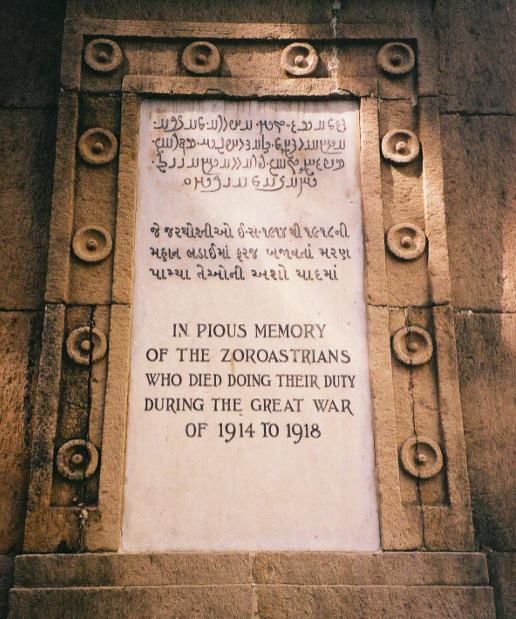
The memorial was constructed in 1926 by the Bombay Parsi Panchayat, the main community trust responsible for the welfare of Parsis in Mumbai. It honours forty-six Zoroastrian soldiers and officers who lost their lives during the Great War between 1914 and 1918 while serving in the British Indian Army. It was was inaugurated by businessman and philanthropist Sir Jamshedji Jeejeebhoy
For a community that has always been relatively small in number, the sacrifice was deeply felt. At the heart of the monument is a Cenotaph (meaning a memorial structure honouring the dead whose remains may lie elsewhere) bearing an inscription that reads:
“In pious memory of the Zoroastrians who died doing their duty during the Great War 1914–1918.”
Beneath this dedication are inscribed the names of the forty-six soldiers who died in the conflict. These names represent individuals who left the port city of Bombay to serve on distant battlefields across Europe and other regions affected by the war.
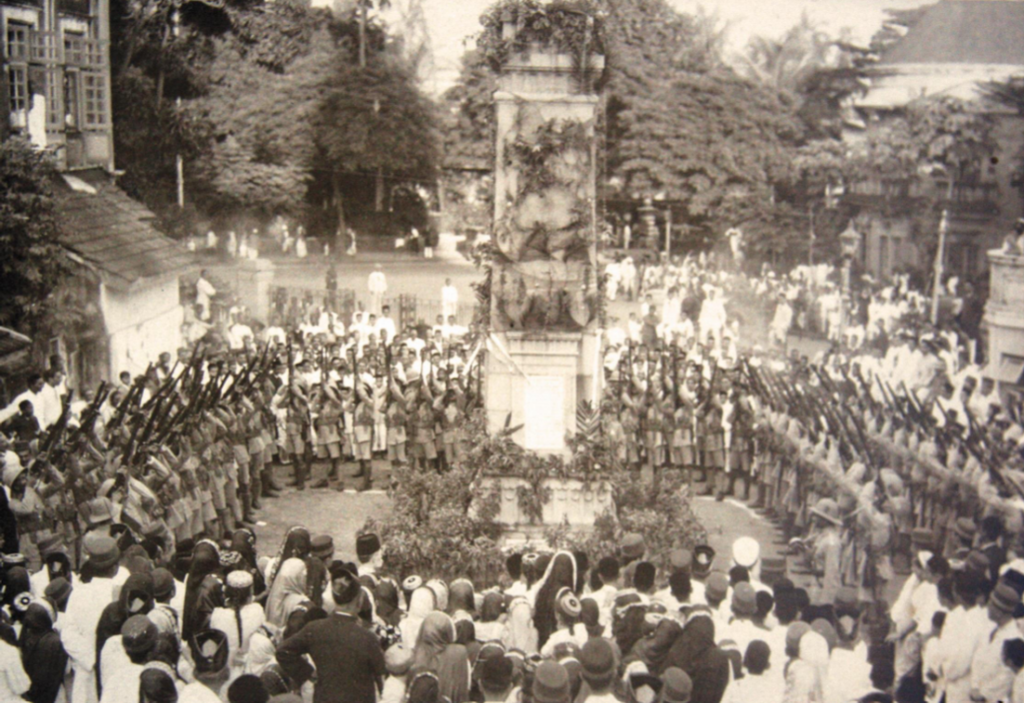
In later years, an additional plaque was placed near the original structure to honour Parsis who lost their lives in subsequent conflicts, including the Second World War and later wars involving independent India. The site thus gradually became a broader place of remembrance for the community’s military contribution.
The Parsi War Memorial of Khareghat Colony represents an important chapter in the story of the city, a reminder that even small communities played their part in events that shaped the wider world.