

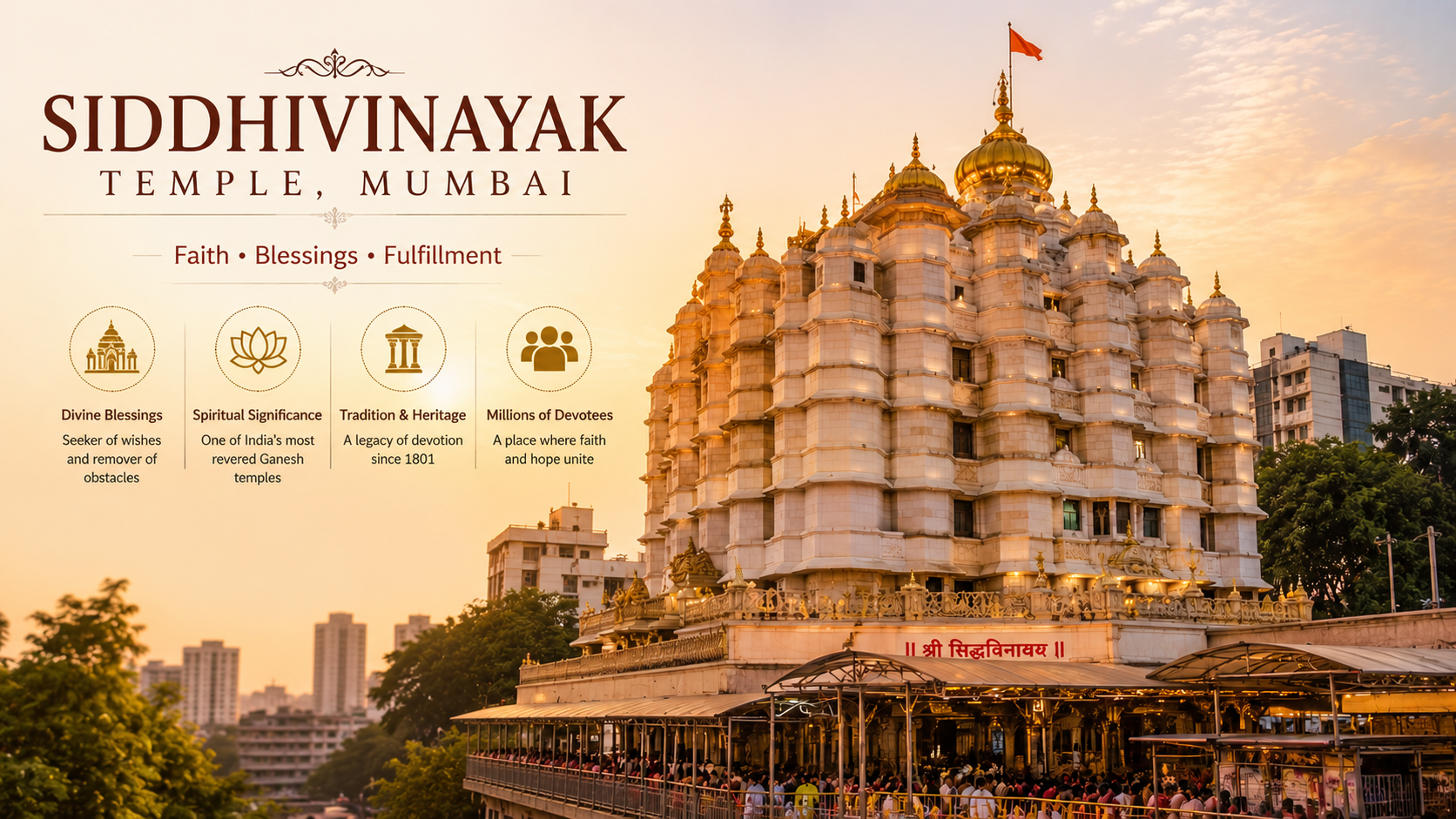
Siddhivinayak Temple, Mumbai – A Complete Visitor's Guide
Few temples in India command the faith, popularity and cultural significance enjoyed by the Siddhivinayak Temple in Mumbai. Situated in Prabhadevi, this revered shrine of Lord Ganesha attracts millions of devotees every year, making it one of the most visited temples in the country. From a modest shrine established in 1801 to one of India's most renowned temples, Siddhivinayak Temple stands as a symbol of faith, devotion and hope. Its spiritual significance, rich history, charitable activities and modern facilities make it an essential destination for devotees and visitors alike. Whether seeking blessings, participating in rituals or experiencing Mumbai's devotional heritage, Siddhivinayak Temple continues to inspire millions every year.
Table of Contents
- 1. Historical Background
- 2. The Temple Today
- 3. Temple Timings
- 4. Daily Rituals and Aartis
- 5. Special Festival Days
- 6. Live Darshan Facility
- 7. Online Donation
- 8. Online Pooja Booking
- 9. How to Reach Siddhivinayak Temple
- 10. Temple Trust and Administration
- 11. Visitor Tips
1. Historical Background
The Siddhivinayak Temple was built on 19 November 1801 by Laxman Vithu Patil and his wife Deubai Patil. Deubai, who had no children of her own, wished that the temple should become a place where childless women and devotees could seek Lord Ganesha’s blessings.
The original temple was a small brick structure with a modest sanctum. Over the years, stories of wishes being fulfilled spread among devotees, transforming Siddhivinayak into one of India's most respected Ganesh temples.
The presiding deity is a black stone idol approximately 2.5 feet high. The idol is unique because the trunk curves to the right, a rare feature considered highly auspicious in Hindu tradition.
2. The Temple Today
The present-day Siddhivinayak Temple bears little resemblance to its original structure. Due to the increasing number of devotees, extensive renovations and expansions have been undertaken over the decades.
- Gold-plated sanctum (Garbhagriha)
- Multi-storeyed temple complex
- Marble and granite interiors
- Carved wooden doors depicting various forms of Lord Ganesha
- Modern queue management systems
- Advanced security infrastructure
- Devotee waiting halls and facilities
Today, the temple welcomes devotees from India and around the world, including celebrities, industrialists and public figures.
3. Temple Timings
Regular Schedule (Wednesday to Monday)
| Activity | Time |
|---|---|
| Kakad Aarti | 5:30 AM – 6:00 AM |
| Morning Darshan | 6:00 AM – 12:00 PM |
| Naivedya | 12:05 PM – 12:30 PM |
| Afternoon Darshan | 12:30 PM – 7:00 PM |
| Dhoop Aarti | 7:00 PM – 7:10 PM |
| Evening Aarti | 7:30 PM – 8:00 PM |
| Night Darshan | 8:00 PM – 9:50 PM |
| Shej Aarti | 9:50 PM |
Tuesday Schedule
| Activity | Time |
|---|---|
| Early Darshan | 3:15 AM – 4:45 AM |
| Kakad Aarti | 5:00 AM – 5:30 AM |
| General Darshan | 5:30 AM Onwards |
| Evening Aarti | 9:00 PM – 10:10 PM |
| Final Darshan | 10:10 PM – 11:30 PM |
| Shej Aarti | 11:45 PM |
Tuesday is considered the most auspicious day for Lord Ganesha and attracts the highest number of devotees.
4. Daily Rituals and Aartis
Kakad Aarti
The first prayer of the day performed before sunrise. It symbolically awakens the deity and marks the beginning of temple activities.
Naivedya
A sacred food offering made to Lord Ganesha around noon.
Dhoop Aarti
An evening ritual involving incense offerings and devotional chanting.
Shej Aarti
The final ritual of the day before the deity retires for the night.
5. Special Festival Days
Vinayaki Chaturthi
Observed every month on the fourth day after the new moon. Special prayers and rituals are conducted.
Sankashti Chaturthi
One of the most important days for Ganesh devotees. Darshan continues until moonrise followed by special poojas.
Ganesh Chaturthi
The ten-day Ganesh festival witnesses enormous crowds, with devotees often waiting several hours for darshan.
6. Live Darshan Facility
Devotees unable to visit the temple can watch live darshan through the official website and mobile application.
The official digital services include:
- Live Darshan Streaming
- Online Darshan Booking
- Video Pooja Services
- Temple Notifications
- Donation Facilities
7. Online Donation
The Siddhivinayak Temple Trust provides secure online donation facilities for devotees worldwide.
Donations support:
- Temple maintenance
- Religious activities
- Educational programs
- Medical assistance
- Social welfare initiatives
8. Online Pooja Booking
Devotees can book various poojas and religious services through the temple's e-Seva platform.
- Ashirvachan Pooja
- Online Video Pooja
- Festival Poojas
- Special Religious Ceremonies
These services allow devotees from around the world to participate in temple rituals remotely.
9. How to Reach Siddhivinayak Temple
By Local Train
- Prabhadevi Station – Approx. 1 km
- Dadar Station – Approx. 2 km
By Metro
Metro connectivity can be combined with taxis or BEST buses to reach the temple conveniently.
By Bus
BEST buses connect Prabhadevi with all major parts of Mumbai.
By Taxi or Cab
App-based taxis and local cabs are easily available throughout Mumbai.
By Air
Chhatrapati Shivaji Maharaj International Airport is approximately 12–15 km from the temple.
10. Temple Trust and Administration
The Shree Siddhivinayak Ganapati Mandir Trust manages the temple under a Maharashtra Government Act. It oversees religious activities, infrastructure development, finances and charitable initiatives.
The trust is among the wealthiest temple trusts in India and contributes significantly to education, healthcare and public welfare programs.
11. Visitor Tips
- Visit early in the morning for shorter queues.
- Tuesdays are the busiest days.
- Dress modestly and respectfully.
- Allow additional waiting time during festivals.
- Keep mobile phones on silent mode.
- Cooperate with security checks.
- Use online services to save time.