

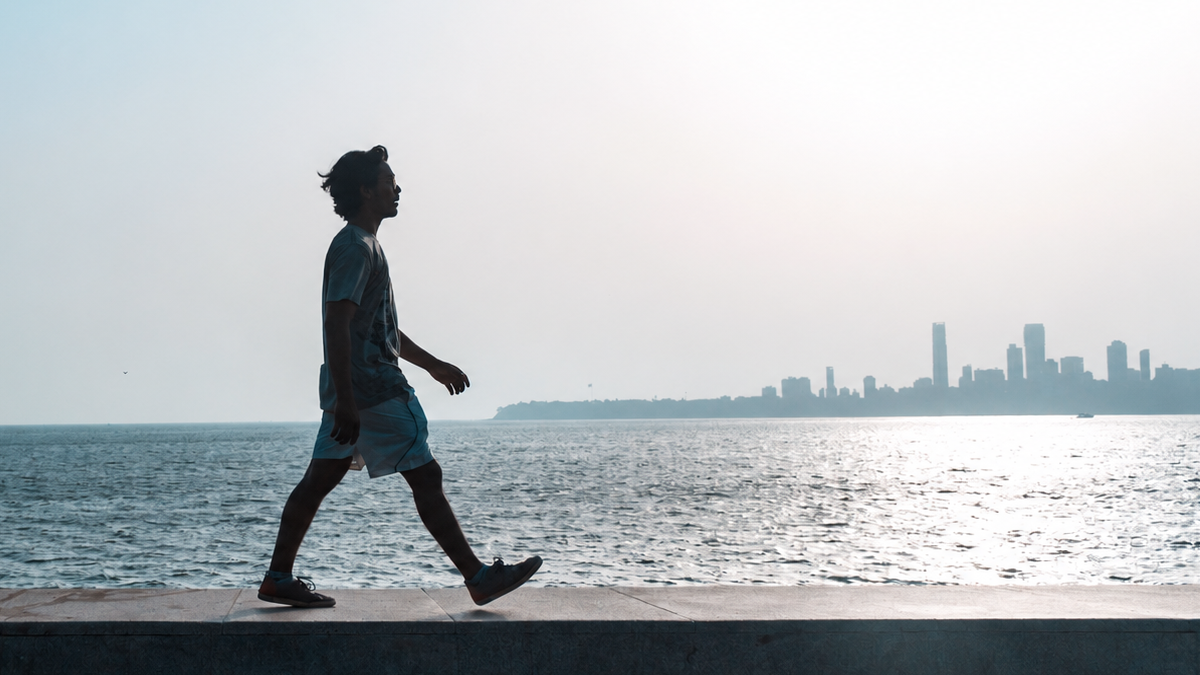
A damp promenade, a pale horizon, and a row of buildings still holding the last of the night could make a compelling opening for a Mumbai city film. I would approach the idea as a short visual sketch of a morning walk, not a complete travel guide. The sequence should give a viewer time to notice the relationship between the waterfront and the city before introducing any text about the place.
My material would begin with photographs made or licensed for the project: a broad waterfront view, a closer image of the sea wall, and a street-facing frame with a clear building silhouette. Each photograph would need an accurate location label in my working notes. Similar-looking stretches of coast should not be combined and presented as one continuous walk. The final film can be an interpretation, but its caption should explain that generated motion has been added.
A quiet waterfront scene gives seedance 3.0 a focused video task: preserve the supplied view while introducing restrained water movement and a gentle change in camera position. I would describe the horizon, the wall, and the direction of light in a written brief alongside the references. The aim would be a reflective city portrait, not fabricated footage of a particular morning or evidence of current conditions.
Choose a view that already contains a direction
I would look for a photograph in which the sea wall leads the eye toward the distance. That line provides a natural path for the viewer without requiring a dramatic drone move. The camera could glide a little along the wall while the skyline remains stable. A low viewpoint might emphasize the wet surface, whereas a higher one would reveal more water. I would choose between them according to the reference rather than force both into one generation.
The first seedance 3.0 preview would be checked for the shape of the wall and the position of the horizon. If either bends, I would shorten the camera movement and reduce the number of distant details. A fixed view with subtle waves may be more convincing than a large move that invents buildings outside the photograph. The recognizable structure of the place matters more than a display of camera motion.
I would keep the morning light consistent with the source image. A dark blue sky should not abruptly become a golden sunset halfway through the shot. If I want a warmer atmosphere, I would select a different reference from the outset and make the whole sequence agree with it. The city film needs one believable light condition, even though the motion is generated and the final result is presented as a creative sketch.
Small sounds can give the coast a sense of scale
The sound design would begin with a properly licensed or self-recorded coastal ambience. I would listen for a gentle wash of water rather than dramatic surf that suggests a different kind of shoreline. A distant bird or a faint city hum can add depth, but I would avoid a dense collection of unrelated effects. The soundtrack should leave room for the image instead of telling the viewer that every part of the frame is busy.
If an audio reference helps establish the rhythm of a seedance 3.0 shot, I would use a simple passage and still assemble the final sound in an editor. That gives me control over where a wave rises and where a pause belongs. I would not claim that the generated scene records the exact sound of the pictured location. An honest caption can describe the piece as an illustrated impression based on supplied photographs.
A short narration could introduce what the filmmaker is noticing: the curve of the wall, the cool surface underfoot, or the city beyond the water. I would keep it descriptive and avoid unverified claims about the age of a building or the history of a landmark. Those facts deserve separate research. The video can remain engaging through observation alone, especially when the frame offers a clear detail to accompany each sentence.
Turn toward the city without losing the morning
The middle of the film would shift from the waterfront to the street-facing reference. I would develop that seedance 3.0 view separately, keeping the same color temperature and a similarly slow pace. The change should feel like a pause in a walk rather than a jump to another time of day. A building edge, a tree canopy, or a simple stretch of pavement can provide enough visual connection without inventing a crowd of pedestrians.
I would avoid generating readable shop signs as part of the moving image. If a sign is important to the real location, a still photograph may be the more accurate choice for that moment. The edit does not have to consist entirely of generated footage. Alternating a careful video shot with a genuine still can preserve information that the moving version does not reproduce reliably.
A useful seedance 3.0 revision would address one mismatch at a time. If the street view feels too bright, I would adjust its reference or lighting direction before adding more movement. If it feels too empty for the intended mood, I would reconsider the composition rather than automatically generate people. A small object already in the photograph, such as a bench or a parked bicycle, can give scale without becoming a new fictional event.
Let the last frame return to open water
I would end the sequence back at the coast, with a quieter view than the opening. The final seedance 3.0 shot could hold the horizon while the water moves gently below it. Returning to a familiar shape gives the short film a sense of completion, even if it contains no plot. The sound could continue briefly after the image fades, preserving the feeling of the walk beyond the last frame.
In the editor, I would add only confirmed location names and a concise description of the creative treatment. Any practical travel information, such as access arrangements or visiting times, would need checking before publication and would stay separate from the atmospheric footage. A beautiful scene cannot establish those facts. Keeping the distinction clear allows the film to invite curiosity without misleading someone who plans an actual visit.
The finished version would be reviewed on a phone as well as a larger screen. I would check that the sea wall remains inside the vertical crop and that captions do not cover the horizon. The result should offer a few attentive moments with Mumbai’s waterfront, grounded in real references and transparent about the generated motion. A city portrait becomes more interesting when it knows which small details to preserve.