

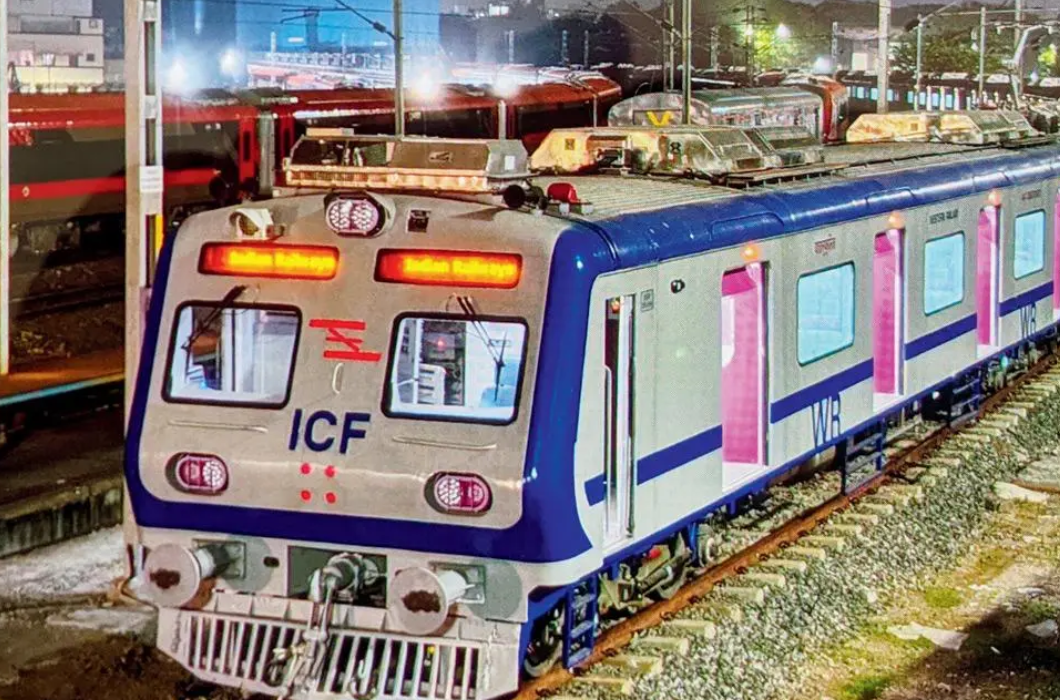
Western Railway recently announced additional AC local train services on the Mumbai suburban network. On paper, this looks like progress — cleaner coaches, more comfort, less sweating through long journeys. Many passengers genuinely welcome this move.
But step onto a crowded platform during peak hours, and a different conversation is unfolding.
Mumbai’s suburban rail network is not just another transport system. It is the daily backbone of the city. Various transport studies and railway data over the years have consistently shown that around 7 to 8 million passengers travel by Mumbai local trains every day, making it one of the busiest commuter rail systems in the world. Out of this, a very large percentage still depends on ordinary non-AC second-class coaches, mainly because they are affordable.
For the average commuter, the issue is not whether AC trains are good or bad. The real question is how these changes affect daily travel realities.
When a non-AC service is converted into an AC service, the timetable may technically remain intact, but the passenger experience can shift in subtle ways. A lower-fare travel option may vanish from that specific time slot, regular crowd patterns may get disturbed, and passengers who earlier boarded one predictable train may now compete for space in fewer non-AC alternatives. In a system where trains already run to over capacity during rush hours, even small adjustments can influence crowding levels, platform congestion, and boarding comfort.
Another important aspect is affordability. AC local fares, while cheaper than metro or cab travel, are still significantly higher than second-class tickets. For many office-goers, students, and service workers travelling long distances from suburbs like Virar, Nalasopara, or beyond, ticket cost is a daily calculation, not a minor detail. Comfort matters — but so does monthly budgeting.
To be clear, the expansion of AC trains is not inherently problematic. In fact, Mumbai commuters have long demanded better travel conditions. The challenge arises when comfort upgrades are perceived to come at the expense of capacity for fare-sensitive passengers.
___ Many commuters even pointed out that during peak hours from Churchgate to Virar there is gap of more than 50 minutes for Non AC train. They added that this situation arisen due to 2 to 3 AC trains are introduced replacing the Non AC trains. Imagine the pressure on commuter when they will board on the next scheduled train._____
Railway authorities have stated that rising demand and strong occupancy levels justify the increase in AC services. That is understandable. AC locals have indeed gained popularity, particularly among long-distance suburban travellers seeking relief from heat and overcrowding.
However, for the common commuter packed into second-class compartments, the concern is practical rather than ideological. Will there be enough non-AC trains during peak hours? Will crowding worsen on certain routes? Are passenger load studies guiding these decisions? These are not complaints — they are reasonable expectations from a system that millions rely upon daily.
Mumbai’s local trains have always been admired for their inclusivity. A single train carries people from every income group, profession, and background. Any large-scale shift in service composition naturally invites scrutiny, especially when affordability and capacity are involved.
Key Questions Many Daily Commuters Still Have:
- How does Western Railway assess the impact of converting non-AC services into AC services during peak hours?
- Is non-AC carrying capacity being protected on heavily crowded routes?
- What passenger load factors or studies guide decisions on which trains get converted?
- Could additional trains be introduced instead of replacing existing non-AC services?
- How will fare affordability be addressed if AC services continue to expand?
- Is there any long-term roadmap for AC vs non-AC balance in Mumbai suburban operations?
In the end, this is less about opposing AC trains and more about preserving balance. Comfort upgrades should ideally expand options without indirectly tightening travel conditions for those who depend on economical services.
Related news:
New AC trains introduced in Mumbai
Midday news on introduction of 12 New AC trains







[…] Western Railway’s Expansion of AC Local Trains But At What Cost to Non-AC Commuters? Facebook Comments Facebook Twitter Pinterest WhatsApp Previous articleTop 14 Places To Party On New Year Evening In MumbaiNext articleMumbai Peace Marathon – Vivekananda Youth Connect admin […]
[…] Read the article in English […]
Comments are closed.