

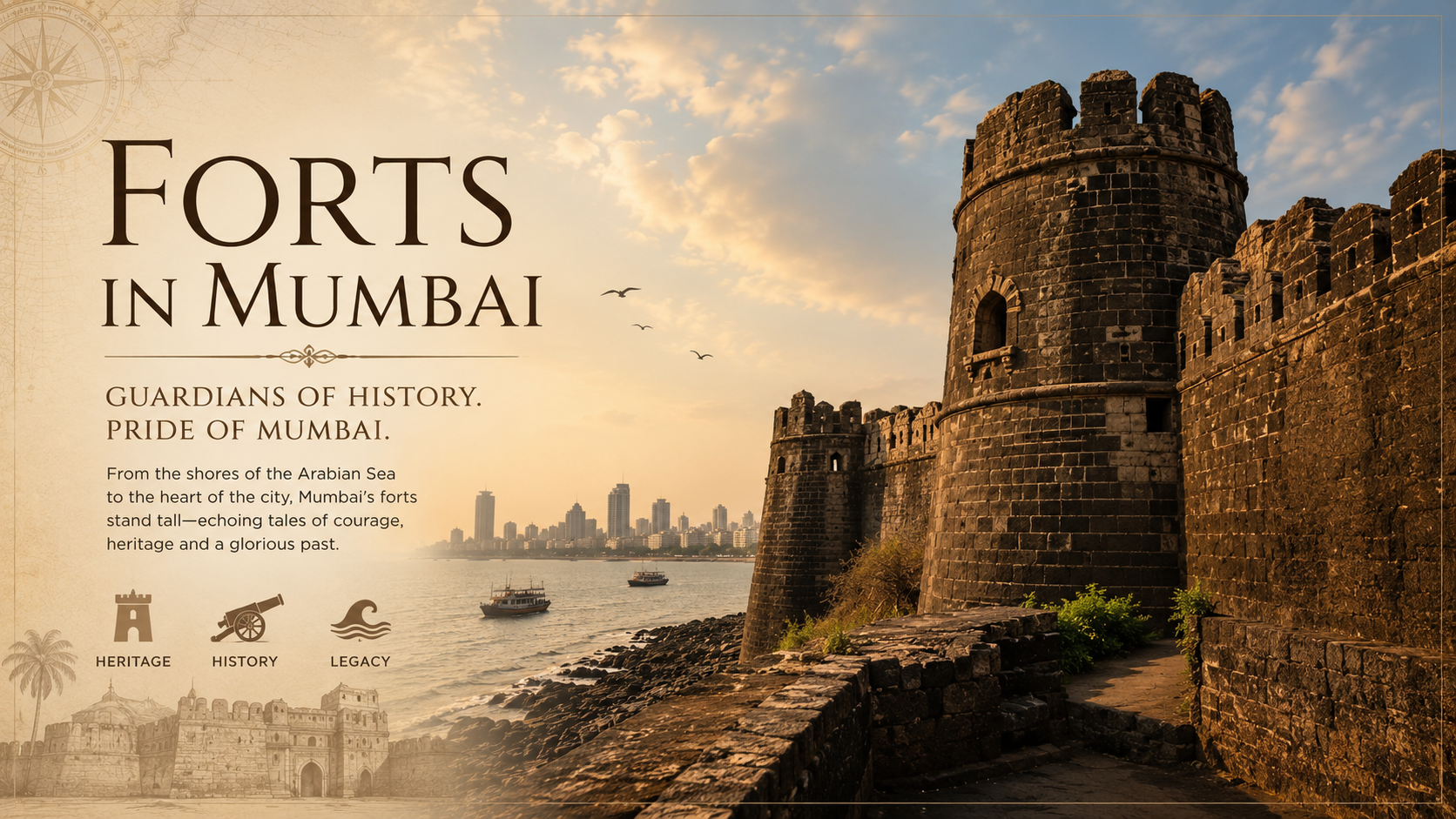
Mumbai is often associated with colonial buildings, bustling markets, beaches and modern skyscrapers. Hidden among this urban landscape, however, are several historic forts that date back to the Portuguese and British eras. These forts once guarded important sea routes, monitored trade activity and protected the scattered islands that eventually grew into modern Mumbai.
Unlike the massive hill forts found elsewhere in Maharashtra, Mumbai’s forts are generally smaller coastal fortifications built for maritime defence. Some have been restored and transformed into popular tourist attractions, while others survive as weathered ruins that quietly preserve centuries of history.
For visitors interested in Mumbai’s heritage, these forts offer a fascinating glimpse into the city’s evolution from a group of fishing islands into one of the world’s largest natural harbours.
Forts of Mumbai at a Glance
| Fort | Location | Built By | Period | Present Condition | Visitor Experience |
| Bandra Fort (Castella de Aguada) | Bandra | Portuguese | 1640 | Well-preserved | Excellent sea views and popular tourist spot |
| Worli Fort | Worli | British | c.1675 | Partially preserved | Historic watchtower overlooking Mahim Bay |
| Sewri Fort | Sewri | British | 1680 | Dilapidated but intact | Heritage site near flamingo habitats |
| Sion Fort | Sion | British | 1669–1677 | Ruined | Hilltop views and colonial history |
| Mahim Fort | Mahim | Various rulers | Medieval period | Poor condition | Historically important but heavily weathered |
| Madh Fort | Madh Island | Portuguese | 17th century | Good condition | Scenic coastal fort and film shooting location |
| Riwa Fort | Dharavi | British | 18th century | Neglected | Lesser-known heritage structure |
Also read about: History of Fort Area Near Churchgate & CSMT
A Brief History of Mumbai’s Forts
The story of Mumbai’s forts begins long before the city acquired its present form. Until the nineteenth century, Mumbai consisted of seven separate islands surrounded by creeks, marshes and open sea. Control over these islands meant control over important maritime trade routes along India’s western coast.
The Portuguese were among the first European powers to recognize the strategic value of these islands. During the sixteenth and seventeenth centuries, they established a series of fortifications to safeguard their settlements, monitor shipping activity and defend against rival naval forces. Bandra Fort and Madh Fort are among the surviving reminders of this period.
When Bombay came under British control in the seventeenth century, the importance of the harbour increased significantly. The British expanded existing defences and constructed additional forts at key locations such as Sewri, Worli, Sion and Riwa. These forts formed a defensive network designed to protect the growing port and secure the surrounding waters.
Unlike the imposing hill forts built by the Marathas for territorial defence, Mumbai’s forts were primarily coastal outposts. Their purpose was surveillance, harbour protection and control of maritime movement rather than large-scale military occupation.
Today, the forts stand as reminders of the city’s strategic importance during the colonial era. While some have benefited from restoration efforts, others continue to face the challenges of urbanisation, weathering and neglect.
BANDRA FORT (Castella de Aguada)
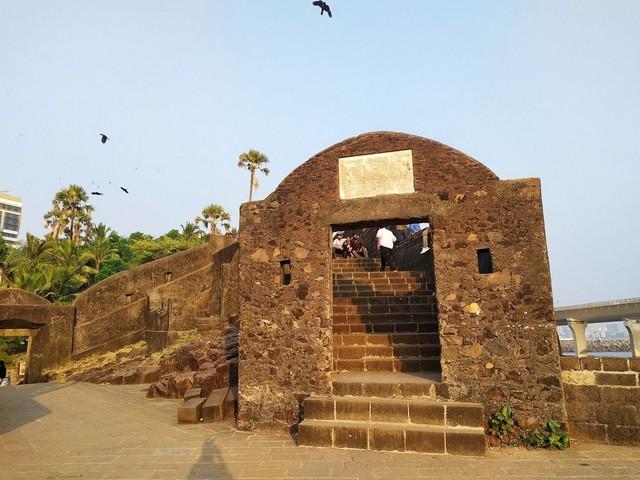
Located at Bandra’s Land’s End, Bandra Fort is the best-known and most visited fort in Mumbai. Built by the Portuguese in 1640, it was strategically positioned to guard Mahim Bay and monitor vessels entering the harbour.
Although much of the original structure has disappeared over time, the surviving ramparts and restored surroundings make it one of Mumbai’s most attractive heritage sites. The fort offers panoramic views of the Arabian Sea and the Bandra-Worli Sea Link, particularly during sunset.
Current Condition: Well-preserved and maintained.
Worth Visiting: Highly recommended.
WORLI FORT
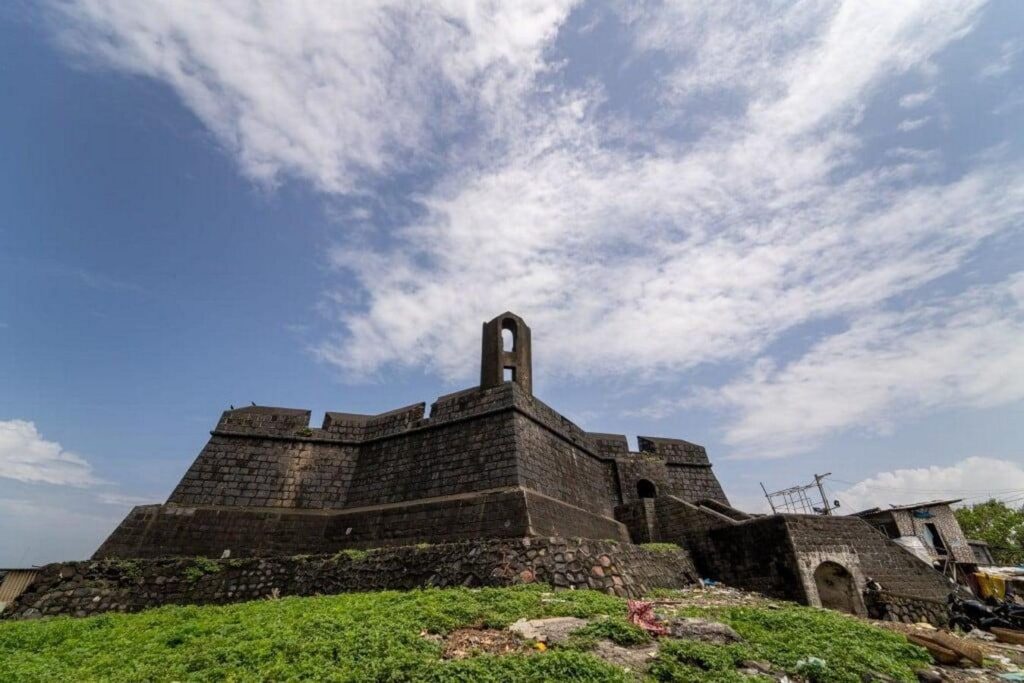
Built by the British during the late seventeenth century, Worli Fort served as a lookout point overlooking Mahim Bay and the surrounding coastline. Its location helped monitor maritime traffic and provide early warning against potential threats approaching the harbour.
The fort remains relatively small but retains much of its original character. Weathering is visible across the structure, yet it continues to offer a glimpse into Mumbai’s colonial past.
Current Condition: Partially preserved.
Worth Visiting: Recommended for history enthusiasts and photographers.
SEWRI FORT
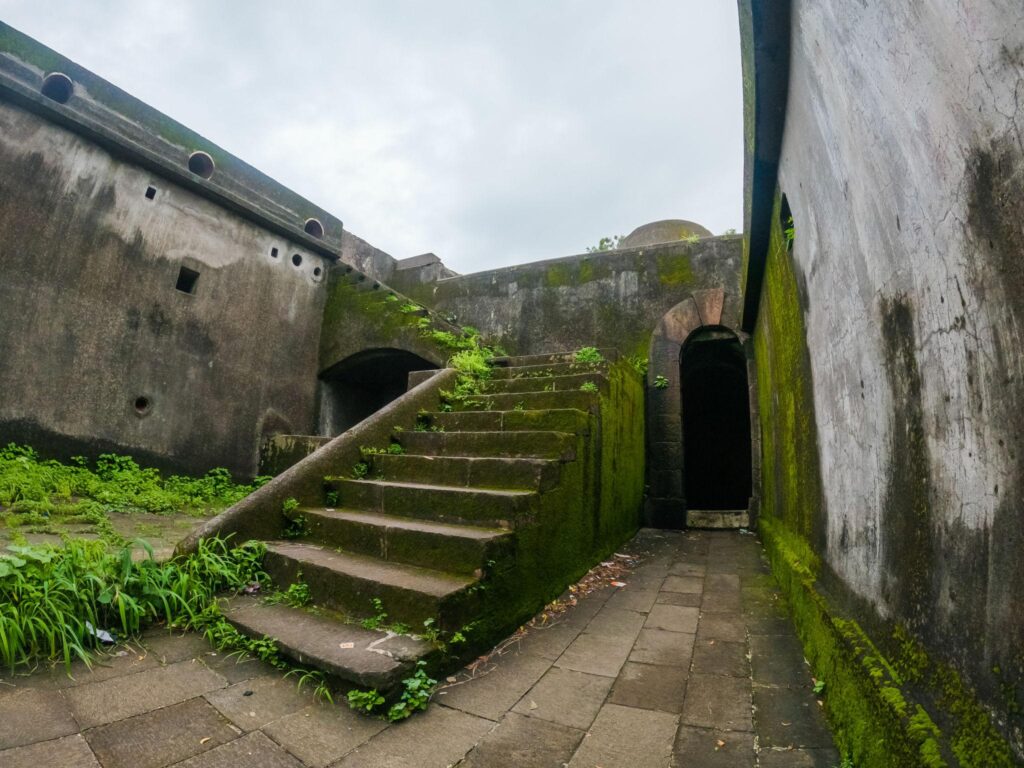
Standing on a hill overlooking Mumbai Harbour, Sewri Fort was constructed by the British in 1680 as part of the city’s coastal defence system. The fort’s bastions, walls and internal courtyard remain largely intact despite decades of neglect.
Today, Sewri Fort is equally known for its proximity to the seasonal flamingo habitats that attract thousands of migratory birds every winter.
Current Condition: Dilapidated but structurally intact.
Worth Visiting: Ideal for heritage and nature lovers.
SION FORT
Sion Fort was built during the governorship of Gerald Aungier and once marked the northern boundary of British Bombay. Perched atop a hill, it provided a strategic vantage point over the surrounding landscape.
Although only fragments of the original structure survive, the fort remains an important landmark in the history of Mumbai’s territorial expansion.
Current Condition: Ruined but accessible.
Worth Visiting: Suitable for those interested in colonial history.
MAHIM FORT
Mahim Fort played an important role in controlling access to Mahim Bay and witnessed several conflicts involving local rulers, the Portuguese and the British. The fort occupies a significant place in Mumbai’s military history despite its current state of deterioration.
Much of the structure has suffered from years of exposure and insufficient conservation.
Current Condition: Poor.
Worth Visiting: Mainly for dedicated history enthusiasts.
MADH FORT
Situated on the scenic Madh Island, Madh Fort is one of Mumbai’s most picturesque coastal fortifications. Built by the Portuguese, it was designed to protect the coastline and nearby settlements.
The fort’s surroundings, which include fishing villages, beaches and coconut groves, create a setting very different from the city’s urban environment.
Current Condition: Good, though access to some areas may be restricted.
Worth Visiting: Recommended.
RIWA FORT
Also known as Dharavi Fort, Riwa Fort formed part of the British defensive network guarding Mahim Creek. Urban development has gradually obscured much of the site, leaving it relatively unknown compared to Mumbai’s other forts.
While its surviving structures are limited, the fort remains an important piece of the city’s military heritage.
Current Condition: Neglected.
Worth Visiting: Primarily for heritage researchers and explorers.
Preserving Mumbai’s Maritime Heritage
The forts of Mumbai may not possess the scale of Maharashtra’s famous hill forts, but they played a vital role in shaping the city’s history. Together they tell the story of maritime trade, colonial rivalry and the strategic importance of Bombay Harbour.
Whether restored, weathered or partially ruined, these structures continue to serve as tangible links to a time when the defence of a handful of islands would ultimately influence the growth of one of the world’s great cities.