
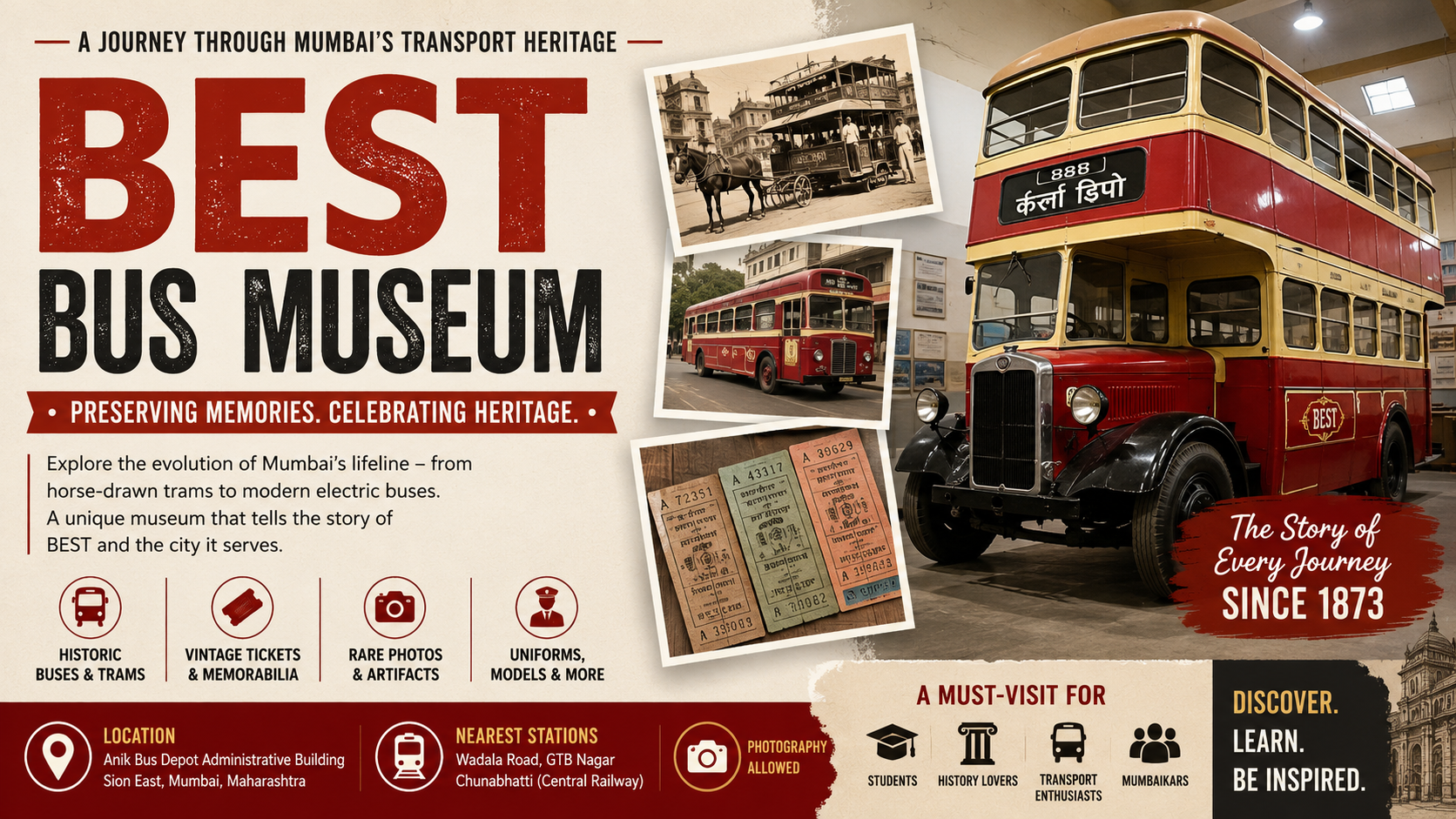
For generations of Mumbaikars, the iconic red BEST bus has been more than just a mode of transport. It has been a symbol of Mumbai itself—connecting people, neighborhoods, and memories. Tucked away inside the Anik Bus Depot complex in Sion East is the BEST Transport Museum, a little-known museum dedicated to preserving the fascinating history of Mumbai’s public transport system.
Overview
The BEST Transport Museum showcases the evolution of Mumbai’s public transport from the era of horse-drawn trams to modern electric buses. Established in 1984 at the Kurla Depot and later shifted to its present location at Anik Depot in 1993, the museum houses an impressive collection of transport-related artifacts, photographs, models, and memorabilia.
For transport enthusiasts, historians, students, and anyone interested in Mumbai’s heritage, the museum offers a unique glimpse into how the city’s lifeline evolved over the past century.
History of BEST
The origins of BEST date back to 1873 when the Bombay Tramway Company introduced horse-drawn trams in the city. Electric trams began operating in 1907, followed by double-decker trams. The first motor bus service was launched in July 1926, marking the beginning of Mumbai’s modern public transport era. Over the decades, BEST became one of the most recognizable institutions in the city.
The museum chronicles this remarkable journey through carefully preserved exhibits and historical records.
What to See Inside
1. Miniature Models of Buses and Trams
One of the museum’s major attractions is its extensive collection of scale models depicting various generations of BEST buses and trams. These models illustrate how vehicle designs changed over time.
2. Vintage Bus Tickets
Visitors can view old paper tickets that were once issued by conductors across Mumbai’s bus network. These tickets reflect changing fare structures and ticketing systems over several decades.
3. Historic Photographs
The museum houses a rich collection of photographs documenting the growth of Mumbai’s transport network, including old tram routes, early buses, depots, and city streets from a bygone era.
4. Daimler Double-Decker Bus Chassis
A highlight of the museum is a preserved Daimler double-decker bus chassis displayed prominently in the exhibition hall. It offers visitors a rare opportunity to examine the engineering of Mumbai’s classic buses.
5. Staff Uniforms and Mannequins
The museum features mannequins dressed as conductors and drivers from different periods, helping visitors understand how the profession evolved over the years.
6. Old Mumbai Street Artifacts
Exhibits include city gas lamps and other street infrastructure elements that once formed part of Mumbai’s urban landscape, recreating the atmosphere of old Bombay.
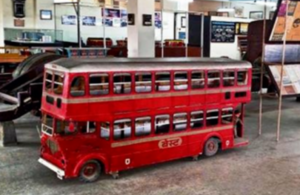
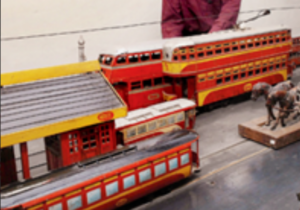 Image source: BEST Undertaking
Why the Museum Matters
The BEST Museum is not merely a collection of buses and tickets. It tells the story of Mumbai’s growth—from a tram-served colonial city to one of the world’s largest metropolitan regions. Every route, ticket, and vehicle reflects the changing social and economic fabric of the city.
For many residents, BEST buses evoke memories of school commutes, office journeys, family outings, and daily life in Mumbai. The museum preserves these memories for future generations.
Visitor Information
BEST Museum
Address: Administrative Building, 3rd Floor, Opp. Mahanagar Gas, Anik Bus Depot, Mumbai – 400033
Tel: 7208971172
Timings
Monday: 7:00 AM to 3:30 PM
Tuesday to Saturday: 7:00 AM to 5:00 PM
Sunday: 9:00 AM to 5:00 PM
Closed on Public Holidays
Entry Free
Contact
Shri. Yatin Pimpale (Asst. Foreman, BEST Museum)
Mobile: 9869043017 WhatsApp: 7303334992
Shri. Ambadas Garje (Clerk, BEST Museum)
Mobile: 7738001651 (WhatsApp)
W.e.f. 1-6-2022
Note: Subject to availability of the museum staff. Please confirm your visit by telephone before visiting.
- Wadala Road Station (Harbour Line)
- GTB Nagar Station (Harbour Line)
- Chunabhatti Station (Central Railway suburban section)
Accessibility Note
The museum is located on the upper floor of the depot building and access may involve climbing stairs. Visitors with mobility limitations should verify accessibility arrangements before visiting.
Best Time to Visit
The museum can be visited throughout the year. Weekday mornings and afternoons generally offer a quieter experience. Transport enthusiasts may combine their visit with nearby attractions in Wadala, Sion, and Byculla.
Photography
Photography is generally permitted inside the museum, making it a rewarding destination for history and transport photography enthusiasts. Videography policies may differ and should be confirmed before filming.
Interesting Facts
- The museum was originally established in 1984 at Kurla Depot before moving to Anik Depot in 1993.
- It is one of the few transport museums in India dedicated specifically to urban bus and tram heritage.
- The collection covers the entire evolution of BEST from horse-drawn trams to modern buses.
- Many longtime Mumbaikars remain unaware of the museum’s existence despite its historical significance.






[…] Click for more information […]
Comments are closed.