
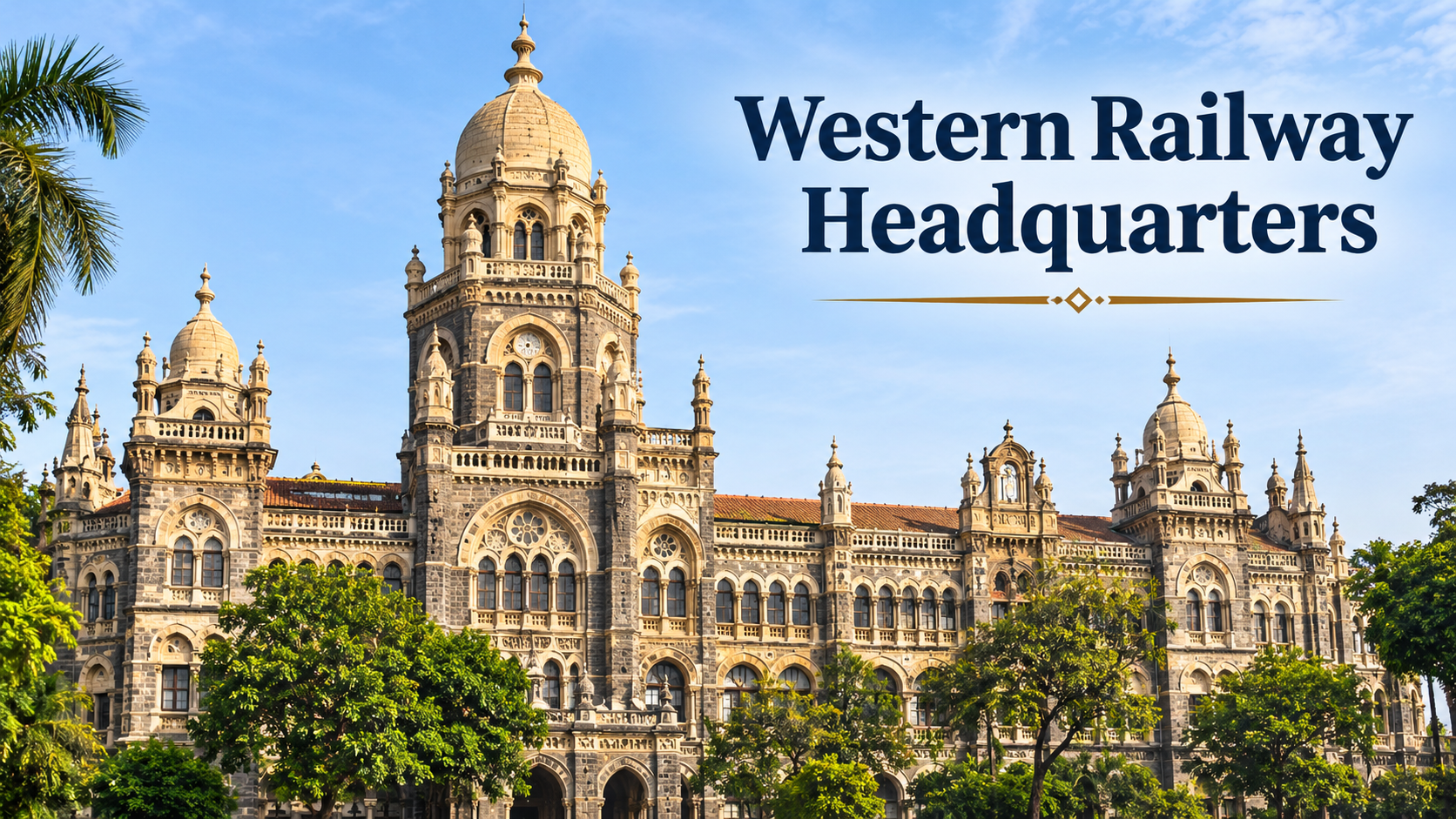
Located just opposite Churchgate railway station, the Western Railway Headquarters is one of South Mumbai’s most recognisable heritage buildings. With its impressive stone façade, central dome, decorative towers and distinctive architectural features, the building stands as a reminder of Mumbai’s colonial-era architecture and the development of the railway system in western India.
Built in the late 19th century, the structure originally served as the headquarters of the Bombay, Baroda and Central India Railway (BB&CI). Today, it houses the administrative headquarters of Western Railway, which plays an important role in operating Mumbai’s suburban railway services and the wider railway network across western India.
Beyond its administrative importance, the building has considerable historical and architectural value. Having witnessed more than a century of Mumbai’s transformation, it remains an important part of the city’s railway heritage.
Table of Contents
1. History of the Headquarters Building
The story of the Western Railway Headquarters is closely associated with the expansion of the Bombay, Baroda and Central India Railway during the 19th century.
Following the establishment of BB&CI Railway in 1855, its initial headquarters was located in Surat. As railway operations expanded towards Bombay, the administrative headquarters was shifted to Bombay in 1863.
Initially, the offices were located in Lalbaug, Parel. With the expansion of railway operations and an increase in administrative staff, the organisation required larger premises. Its offices subsequently moved to different locations, including Dhanji Street, Grant Road, Meadows Street in Fort and a building in the Fort area known today as Brady House.
The need for a permanent and suitably large administrative building eventually led to the development of the present headquarters near Churchgate.
The BB&CI Railway acquired the plot opposite Churchgate station in 1889. Construction began in May 1894 and the building was completed in January 1899.
The completed structure became the permanent headquarters of BB&CI Railway and subsequently continued to serve as the headquarters of Western Railway.
Source: Western Railway and historical heritage documentation.
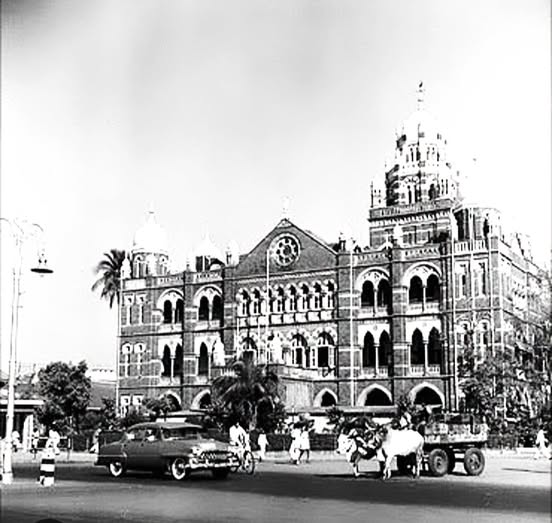
The building originally belonged to the Bombay, Baroda and Central India Railway, one of the important railway companies operating during British rule. BB&CI played a significant role in connecting Bombay with important commercial and industrial centres in western and northern India. Its railway network gradually expanded towards Baroda, Ahmedabad, Ratlam, Delhi and other regions. After India’s independence, several railway systems were reorganised and merged to create the present railway zones. Western Railway was formed in 1951 through the merger of BB&CI Railway with other railway systems, including Saurashtra, Rajputana and Jaipur. Today, Western Railway administers six divisions: Its jurisdiction covers Gujarat and parts of Maharashtra, Rajasthan and Madhya Pradesh. The Mumbai suburban railway network under Western Railway extends from Churchgate towards Virar and Dahanu Road, serving millions of commuters. Further reading: Western Railway – Official Website. The Western Railway Headquarters is an impressive example of late 19th-century institutional architecture in Mumbai. Designed with a combination of Venetian Gothic, Gothic Revival and Indo-Saracenic influences, the building reflects the architectural approach commonly seen in several prominent public structures constructed during the colonial period. One of the most prominent features is the central tower, which rises above the main building. Its architectural composition includes a square base transitioning into an octagonal structure and finally culminating in a circular dome. Smaller domes, cupolas and decorative towers add to the building’s distinctive skyline. The exterior is predominantly constructed using grey-blue basalt stone. Porbandar stone has also been used for important architectural details, including domes, mouldings and cornices. The façade features: The building combines European Gothic architectural influences with Indian architectural elements. The Indo-Saracenic influence is visible in the bulbous domes and ornamental features, while the Gothic influence can be seen in its arches, vertical proportions and overall composition. The building is listed as a Grade I heritage structure, recognising its architectural and historical importance. Reference: Mumbai Metropolitan Region Heritage Conservation Society. The headquarters building was designed by Frederick William Stevens, one of the most prominent architects associated with colonial-era Bombay. Stevens is also credited with designing several other important structures in Mumbai, most notably the former Victoria Terminus, now known as Chhatrapati Shivaji Maharaj Terminus (CSMT). His architectural work contributed significantly to the distinctive heritage character of Mumbai. The Western Railway Headquarters reflects his ability to combine European architectural styles with Indian design elements. The building also witnessed a major incident in its early history. In November 1905, a fire broke out at the headquarters, causing damage to parts of the structure and destroying a considerable amount of historical material and records. The incident was an important setback for the organisation, as the building contained administrative documents associated with the railway’s operations. Subsequent repair and restoration work helped preserve the building, allowing it to continue functioning as the railway’s administrative headquarters. After serving as an administrative building for more than a century, the headquarters has undergone restoration work to preserve its architectural character. One major restoration programme was undertaken between 2007 and 2009. The work included cleaning the stone façade, repairing damaged architectural elements and addressing deterioration caused by weathering and vegetation. In 2023–24, Western Railway undertook another major restoration initiative as the building approached its 125th anniversary. The programme included restoration and improvement of the building’s surroundings, landscaping and illumination. The 125th anniversary was celebrated in January 2024 with exhibitions, heritage walks and cultural programmes highlighting the history of the headquarters. The Western Railway Headquarters is not just an administrative office. It also preserves an important part of the railway’s history. A Heritage Gallery has been developed within the building, displaying historical photographs, documents, maps, models and other material associated with the development of Western Railway. The gallery offers visitors an opportunity to understand how the railway system evolved from the early days of BB&CI to the present-day Western Railway network. A Heritage Lounge has also been developed within the headquarters. During the 125th anniversary celebrations in January 2024, Western Railway organised heritage walks that included explanations of the building’s architectural features and visits to the Heritage Gallery and Heritage Lounge. Visitor information: The headquarters remains an operational railway office. Public access to its gallery and other areas should be confirmed with Western Railway before planning a visit. Entry arrangements, permissions and timings may vary. The Western Railway Headquarters is located opposite Churchgate railway station in South Mumbai. Address: Western Railway Headquarters, Churchgate, Mumbai, Maharashtra, India. Churchgate is the southern terminus of Mumbai’s Western Line. The headquarters is located directly opposite the railway station and is easily accessible on foot. Several BEST bus services operate in the Churchgate and adjoining Fort areas. The building can be approached through Maharshi Karve Road and Veer Nariman Road.2. From BB&CI Railway to Western Railway
3. Architecture and Design
The Central Dome and Towers
Stone Façade and Decorative Work
Architectural Significance
4. The Architect Behind the Building
5. The Fire of 1905
6. Restoration and Heritage Conservation
7. Heritage Gallery and Visitor Experience
8. Location and How to Reach
By Local Train
By Bus
By Road
Nearby Attractions
9. Quick Facts
Building Western Railway Headquarters Earlier name BB&CI Railway Headquarters Location Churchgate, Mumbai Construction started May 1894 Construction completed January 1899 Architect Frederick William Stevens Architectural influences Venetian Gothic, Gothic and Indo-Saracenic Original construction cost Approximately ₹7.5 lakh Heritage classification Grade I Original purpose BB&CI Railway administrative headquarters Present use Western Railway administrative headquarters Major fire November 1905 125th anniversary January 2024 10. References and Further Reading
Memumbai.com – Exploring the history, heritage and places of Mumbai.