

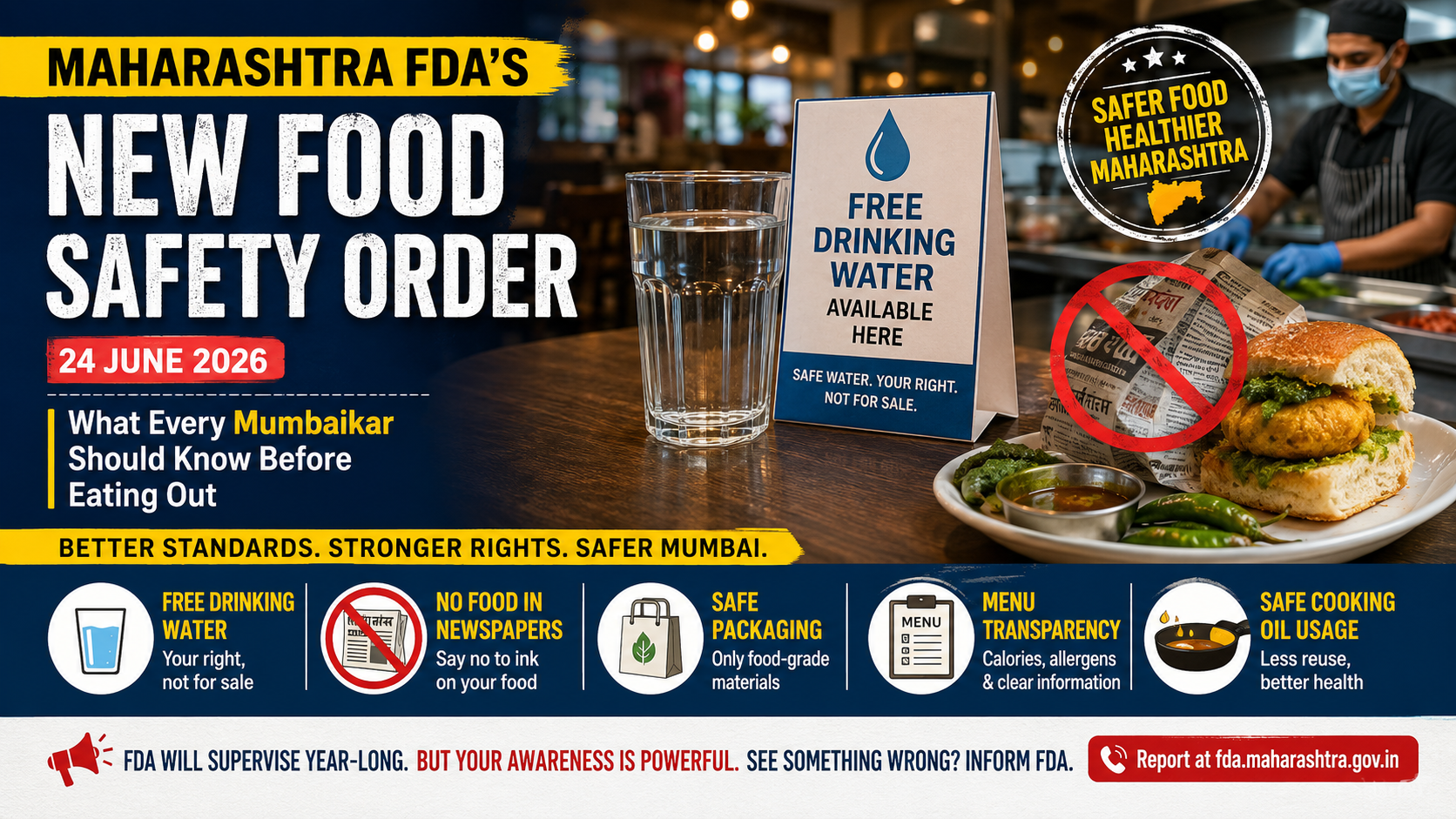
The Maharashtra Food and Drug Administration (FDA) has issued a major food safety order on 24 June 2026 to improve hygiene and food safety standards across the state. The order applies to restaurants, hotels, street food vendors, bakeries, cloud kitchens, caterers, sweet shops, and food delivery businesses.
For Mumbai, where eating outside is part of daily life, this order is highly significant. Whether you eat at roadside stalls, local eateries, cafes, or premium restaurants, these new rules directly impact your food safety and consumer rights.
The FDA has announced year-long supervision and inspections to ensure compliance. However, enforcement cannot depend only on authorities. Consumers also have an important role to play by staying aware and reporting violations whenever they notice unsafe practices.
Instead of seeing this only as a regulatory order for food businesses, Mumbaikars should understand it as a consumer protection initiative.
Consumer-Focused Orders You Should Know
Some parts of the new FDA order directly benefit customers and improve transparency, hygiene, and safety.
Free Drinking Water Must Be Available
One of the most important customer-friendly rules is that restaurants and food establishments must provide safe drinking water free of cost.
Customers should not be forced to purchase bottled water simply to access drinking water while dining.
As a customer, you can now expect:
- Safe drinking water availability
- No compulsory purchase of bottled water
- Greater consumer convenience
This strengthens basic customer rights.
Menu Transparency: Know What You Are Eating
Large restaurants and food businesses are now expected to improve transparency in menu information.
Customers should have access to:
- Calorie information
- Allergen details
- Veg / Non-veg identification
This helps customers make better decisions, especially those with:
- Food allergies
- Diabetes
- Weight management concerns
- Lifestyle-related health conditions
Food transparency is no longer just a premium feature—it is becoming a necessity.
Strict Monitoring of Cooking Oil Usage
This is one of the most important health-related measures in the order.
Many food businesses, especially outlets selling fried foods, repeatedly reuse cooking oil. This can be harmful to health.
Repeated reheating of oil can lead to harmful compounds linked to:
- Heart disease
- Obesity
- Inflammation
- Long-term health complications
Customers should remain alert when consuming fried food from stalls or eateries where oil appears excessively dark or overused.
Ban on Serving Food in Newspapers
Serving food in newspapers or printed paper has been prohibited.
This practice is still common in local food stalls and small eateries. However, printing ink contains harmful chemicals that may contaminate food.
Customers should avoid accepting food served in:
- Newspapers
- Printed paper
- Non-food-grade wrapping
This is particularly relevant for:
- Vada pav
- Bhajiyas
- Pakoras
- Samosas
- Other fried snacks
Safe Packaging for Food Delivery and Takeaway
All food businesses must use proper food-grade packaging materials.
This is important for:
- Takeaway orders
- Home delivery
- Bakery products
- Sweet boxes
- Parcel services
Customers should pay attention to the quality of packaging and avoid food packed in unsafe materials.
Consumers Must Also Play an Active Role
The Maharashtra FDA will conduct inspections and supervision throughout the year. But authorities alone cannot monitor every food outlet daily.
Consumer awareness is equally important.
As responsible citizens, we should remain observant and report violations to the FDA whenever necessary.
Watch for:
- Unhygienic kitchens
- Unsafe food packaging
- Food served in newspapers
- Reused cooking oil
- Lack of drinking water
- Poor food handling practices
An alert consumer can help improve food safety across Mumbai.
Other Important Rules for Food Businesses
Apart from consumer-focused directives, the FDA has also introduced several compliance requirements for food businesses.
FSSAI Licence is Mandatory
Every food business must have a valid FSSAI licence or registration and display it prominently. This applies to all Restaurants, Hotels, Cafes, Caterers, Bakeries, Street food stalls and Cloud kitchens. Customers should check whether the license is visible.
Health Check-Up of Food Handlers
Food handlers and kitchen staff must undergo regular medical check-ups.
Healthy and hygienic food handlers reduce contamination risks and improve overall food safety.
Food Safety Training for Staff
Food businesses are expected to ensure proper food safety training for staff. Training includes about Hygiene practices, Safe storage, Clean food preparation, Contamination prevention, Safe serving standards.
Raw Materials Must Be Procured from Approved Sources
Businesses must source raw materials only from authorised suppliers. This includes Oil, Dairy, Meat, Spices, and Packaged ingredients. Quality ingredients are the foundation of safe food.
Strict Penalties for Violations
The FDA has made it clear that violations will attract strict action. Penalties may include several legal actions such as heavy fines and license suspension. Other penalties can be even closure of business and imprisonment in severe cases.
Mumbai’s food culture is vibrant and diverse, from iconic street food to fine dining. This new FDA order is a major step toward making that food ecosystem safer, cleaner, and more accountable.
The responsibility now lies with both food businesses and consumers. The FDA will monitor compliance, but an aware consumer is equally powerful. Safer food begins with awareness.