
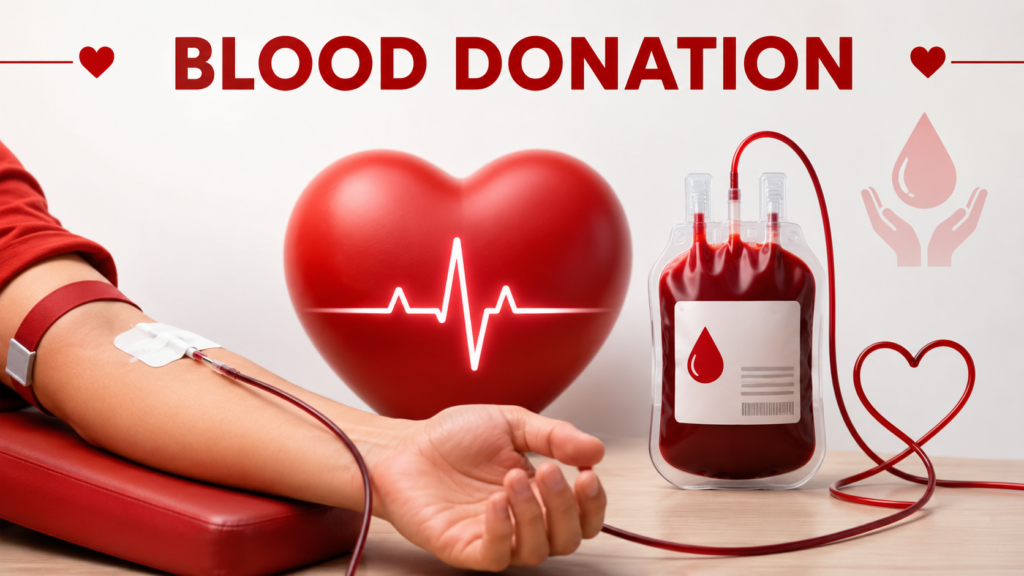
Every second counts during a medical emergency. Whether it is a road accident, major surgery, childbirth complications, cancer treatment, thalassaemia, organ transplantation or any other serious illness, timely availability of safe blood can save lives.
Find the Blood Bank addresses in Mumbai.
Mumbai has one of India’s largest healthcare networks comprising government hospitals, BMC hospitals, private hospitals, charitable institutions, defence establishments and independent blood centres. Together, these organisations collect, process, test and supply thousands of units of blood and blood components every day.
However, during emergencies many people struggle to locate the appropriate blood bank quickly. Different hospitals maintain different inventories, blood components may not always be available at every centre and many people are unaware of whom to contact first.
This guide has been prepared to provide reliable information about Mumbai’s blood banking system, explain how blood donation works, answer common questions and help citizens locate blood banks across the city through a comprehensive directory.
Whether you are a blood donor, patient, caregiver, hospital visitor or simply wish to contribute to society through voluntary blood donation, this guide will help you understand the complete process.
Table of Contents
- Emergency Contacts
- Mumbai Blood Bank Directory
- What is a Blood Bank
- Why Blood Donation is Important
- Who Can Donate Blood
- Blood Donation Process
- Blood Components Explained
- Blood Group Compatibility
- Rare Blood Group
- Storage Life of Blood Component
- Myth and Facts
- Useful Resources
- Disclaimer
Mumbai Blood Bank Directory
The directory below lists major blood banks located across Mumbai. Every effort has been made to include official addresses, contact details and websites wherever available. Since hospitals may update their contact information or services over time, users are advised to confirm the latest details directly with the respective blood bank before visiting. Find the Blood Bank addresses in Mumbai.
If you urgently require blood or blood components, contact the nearest hospital blood bank immediately. It is advisable to contact more than one blood bank simultaneously, particularly when looking for rare blood groups or specialised blood components. ,Here is the details of blood banks
| Organisation | Purpose |
|---|---|
| Federation of Bombay Blood Banks (FBBB) | Guidance regarding member blood banks in Mumbai. |
| Nearest Government / Municipal Hospital Blood Bank | Emergency blood availability and blood component information. |
| Private & Trust Blood Banks | Availability of blood components and voluntary blood donation services. |
Important: Availability of blood changes continuously depending on donations and medical demand. Always call the blood bank before travelling to confirm the availability of the required blood group or component.
Why Blood Donation is Important?
Blood is one of the few life-saving resources that cannot be manufactured artificially. Every day, thousands of patients across Mumbai depend on voluntary blood donors for surgeries, trauma care, cancer treatment, childbirth complications, organ transplants, thalassaemia management and many other medical conditions. A single blood donation has the potential to save up to three lives because it can be separated into different blood components.
Although Mumbai has a well-developed healthcare network, the demand for blood remains constant throughout the year. Seasonal diseases, road accidents, major surgeries and emergencies can quickly increase the requirement for specific blood groups and blood components such as platelets and plasma. Regular voluntary blood donation helps hospitals maintain adequate stock and ensures that patients receive timely treatment.
Did You Know
One unit of whole blood can be separated into Packed Red Blood Cells (PRBC), Platelets, Plasma and Cryoprecipitate, allowing one donation to benefit multiple patients with different medical needs.
Benefits to Society
- Helps save lives during emergencies and surgeries.
- Supports cancer, dialysis and thalassaemia patients requiring regular transfusions.
- Improves availability of rare blood groups.
- Encourages voluntary and safe blood donation.
- Strengthens Mumbai’s healthcare preparedness during disasters and epidemics.
Who Can Donate Blood?
Most healthy adults can safely donate blood if they meet the eligibility criteria prescribed by the National Blood Transfusion Council and the medical officer at the blood donation centre.
| Eligibility Criteria | Requirement |
|---|---|
| Age | 18 to 65 years |
| Weight | Minimum 45–50 kg (depending on donation type) |
| Haemoglobin | As per prescribed medical standards |
| General Health | Should be healthy and free from active infection or fever |
| Interval Between Donations | Generally 3 months for men and 4 months for women (subject to prevailing medical guidelines) |
Tip: Get adequate sleep the night before donating blood, eat a light meal and drink plenty of water.
Who Should Avoid Donating Blood?
- Individuals suffering from fever or active infections.
- People recovering from major surgery until medically fit.
- Pregnant women and mothers immediately after childbirth.
- People with certain infectious diseases or medical conditions that make blood donation unsuitable.
- Individuals temporarily deferred after certain vaccinations, tattoos or travel, depending on medical guidelines.
Find the Blood Bank addresses in Mumbai.
Blood Donation Process
The entire blood donation process generally takes about 30–45 minutes, while the actual blood collection usually takes only 8–10 minutes.
| Step | Description |
|---|---|
| 1. Registration | Complete the donor registration form and provide identification. |
| 2. Medical Screening | Medical history, blood pressure, pulse, weight and haemoglobin are checked. |
| 3. Blood Collection | Approximately 350–450 ml of blood is collected using sterile disposable equipment. |
| 4. Refreshments | Donors are advised to rest for a few minutes and consume fluids and light refreshments. |
| 5. Laboratory Testing | Every donated unit is tested for transfusion-transmissible infections before use. |
| 6. Component Separation | Blood is separated into various components for different medical purposes. |
Important: Never donate blood on an empty stomach or immediately after strenuous physical activity. Inform the medical officer if you are taking any medication or have recently recovered from an illness.
Types of Blood Donation
| Type | Purpose |
|---|---|
| Whole Blood Donation | The most common type of donation used for surgeries, trauma care and general transfusion. |
| Platelet Donation (Apheresis) | Commonly required for cancer patients, dengue patients and those undergoing chemotherapy. |
| Plasma Donation | Used for patients with clotting disorders, burns and certain medical treatments. |
| Double Red Cell Donation | Special procedure to collect two units of red blood cells while returning plasma and platelets to the donor. |
Blood Components Explained
A common misconception is that patients always require whole blood. In reality, modern blood banks separate each donated unit into different blood components so that each component can be used to treat patients with specific medical conditions. This process enables a single blood donation to benefit multiple patients and reduces unnecessary transfusions.
Blood component therapy is now the standard practice in most hospitals because it provides only the component required by the patient, improving treatment effectiveness while reducing risks associated with unnecessary transfusions.
| Blood Component | Primary Uses | Approximate Shelf Life* |
|---|---|---|
| Packed Red Blood Cells (PRBC) | Major surgeries, trauma, severe anaemia and blood loss. | Up to 35–42 days |
| Platelets | Dengue, cancer treatment, chemotherapy, bone marrow disorders and low platelet count. | 5–7 days |
| Fresh Frozen Plasma (FFP) | Clotting factor deficiencies, liver disease, severe burns and massive blood loss. | Up to 1 year (when stored frozen) |
| Cryoprecipitate | Bleeding disorders, fibrinogen deficiency and certain clotting disorders. | Up to 1 year (frozen) |
* Storage periods may vary depending on national guidelines and storage conditions.
Why Components?
Using blood components instead of whole blood allows doctors to treat patients more effectively. For example, a dengue patient usually requires platelets rather than whole blood, while someone with severe blood loss may require Packed Red Blood Cells (PRBC).
Find the Blood Bank addresses in Mumbai.
Blood Group Compatibility
Before every transfusion, blood compatibility is carefully checked to ensure the donor’s blood matches the recipient’s blood group. Incorrect transfusion can lead to serious complications. Blood banks therefore perform blood grouping, cross-matching and other safety tests before issuing blood.
| Blood Group | Can Donate To | Can Receive From |
|---|---|---|
| O Negative | All Blood Groups | O Negative |
| O Positive | O+, A+, B+, AB+ | O+, O- |
| A Positive | A+, AB+ | A+, A-, O+, O- |
| A Negative | A+, A-, AB+, AB- | A-, O- |
| B Positive | B+, AB+ | B+, B-, O+, O- |
| B Negative | B+, B-, AB+, AB- | B-, O- |
| AB Positive | AB+ Only | All Blood Groups |
| AB Negative | AB+, AB- | AB-, A-, B-, O- |
Interesting Fact:
O Negative is often referred to as the “Universal Red Cell Donor” because it can be used in many emergency situations when the patient’s blood group is not immediately known. AB Positive is known as the “Universal Recipient” for red blood cell transfusions.
Rare Blood Groups
Some blood groups are uncommon and may require additional time to arrange. Patients with rare blood groups are encouraged to keep a record of their blood group and, where appropriate, register with recognised donor networks. Regular voluntary donors with rare blood groups play an important role in supporting patients who require these specialised transfusions.
| Rare Blood Group | Remarks |
|---|---|
| Bombay Blood Group (hh) | A very rare blood group first identified in Mumbai. Individuals with this blood group can receive blood only from donors with the same Bombay phenotype. |
| Rh Negative Groups | Less common than Rh Positive groups and may require additional effort to locate compatible donors. |
Important: If you have a rare blood group, consider becoming a regular voluntary donor (subject to medical eligibility). This can significantly help patients who may otherwise face difficulty finding compatible blood.
Storage Life of Blood Components
Different blood components have different storage requirements. Proper storage under controlled temperatures is essential to maintain safety and effectiveness.
| Component | Storage Temperature | Approximate Shelf Life |
|---|---|---|
| Packed Red Blood Cells | 2°C to 6°C | 35–42 days |
| Platelets | 20°C to 24°C (continuous agitation) | 5–7 days |
| Fresh Frozen Plasma | -18°C or below | Up to 1 year |
| Cryoprecipitate | Frozen | Up to 1 year |
Blood Donation Myths vs Facts
| Myth | Fact |
|---|---|
| Blood donation is painful. | Only a brief needle prick is usually felt during donation. |
| Donating blood causes permanent weakness. | Most healthy donors resume normal activities after adequate rest and hydration. |
| Blood donation affects immunity. | Blood donation does not weaken the immune system in healthy individuals. |
| Older adults cannot donate blood. | Healthy individuals within the prescribed age limits may be eligible, subject to medical assessment. |
| You need to know your blood group before donating. | No. Blood grouping is routinely performed as part of the donation process. |
Useful Resources
The following organisations and resources provide authentic information on blood donation, blood banking and healthcare services:
- Federation of Bombay Blood Banks (FBBB): A non-profit organisation that coordinates with member blood banks in Mumbai and promotes voluntary blood donation. Phone: 022-66529682
- National Blood Transfusion Council (NBTC): Provides national guidelines, policies and awareness initiatives related to safe blood transfusion services in India.
- Maharashtra State Blood Transfusion Council (SBTC): Coordinates blood transfusion services and voluntary blood donation programmes across Maharashtra. Phone: 022-22830216. https://www.mahasbtc.com
- Official Hospital Websites: Many hospitals publish updated information on their blood banks, blood donation camps, eligibility criteria and contact details.
- Treating Hospital or Doctor: In emergencies, always follow the advice of the treating doctor regarding the required blood group or blood component and contact the recommended blood bank directly.
- Find the Blood Bank addresses in Mumbai.
Disclaimer
The information provided in this directory is intended for public awareness and general guidance. Every effort has been made to compile details from official hospital websites and other recognised sources. However, blood bank contact numbers, operating hours, available services and blood stock status may change without prior notice. Users are strongly advised to contact the respective blood bank directly before visiting to confirm the availability of the required blood group or blood component, donor eligibility requirements and any necessary documentation. Memumbai does not collect, store or issue blood and cannot guarantee the availability of blood or blood components at any listed blood bank. In the event of a medical emergency, always seek immediate assistance from your treating hospital or healthcare provider.