


Rising gracefully above the historic Fort precinct of South Mumbai, the Rajabai Tower remains one of the city’s most admired architectural landmarks. Built in the 19th century within the University of Bombay (now University of Mumbai) campus, the tower is far more than a clock structure — it represents philanthropy, filial devotion, and the grandeur of the Gothic Revival movement that helped shape Mumbai’s Victorian skyline.
The foundation was laid on 1st March 1969 and completed by November 1878, the tower continues to define the visual identity of the Oval Maidan area, where Victorian Gothic and Art Deco buildings coexist in rare harmony.
Article is detailed with following topics:
- Premchand Roychand: The Visionary Philanthropist
- Premchand Roychand & Mother Rajabai: A Gift of Time
- Sir George Gilbert Scott: The Architectural Mastermind
- Architectural Brilliance of Rajabai Tower
- Key Highlights
Premchand Roychand: The Visionary Philanthropist

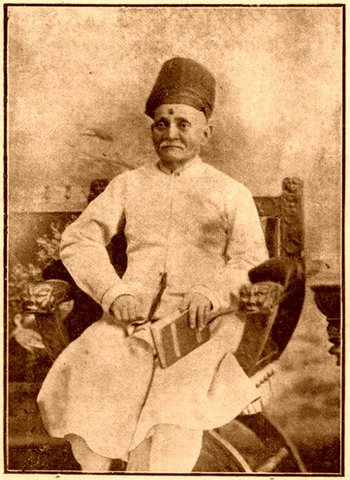
Premchand Roychand (often spelled Premchund Roychund in colonial records) was among the most prominent Indian businessmen of 19th-century Bombay. A Jain entrepreneur, financier, and stockbroker, he rose to extraordinary wealth during the cotton boom of the 1860s, a period triggered by global market disruptions caused by the American Civil War.
At a time when Bombay was transforming into a commercial powerhouse, Roychand distinguished himself not only through financial success but also through remarkable generosity. In 1864, he offered a substantial donation to the University of Bombay for the construction of a library building, demonstrating his commitment to education and public institutions.
Later that same year, Roychand made an even more personal and historically significant gesture.

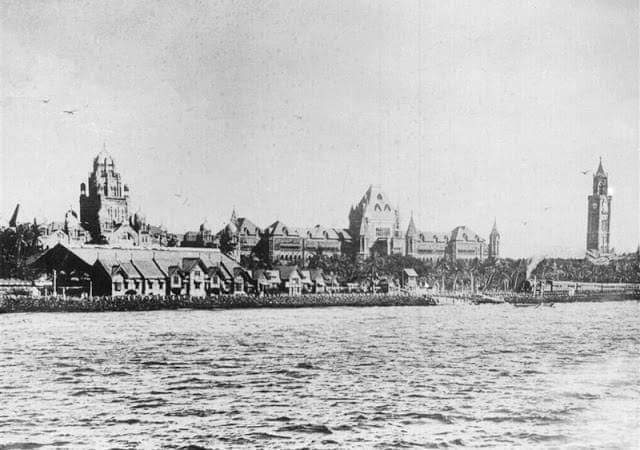

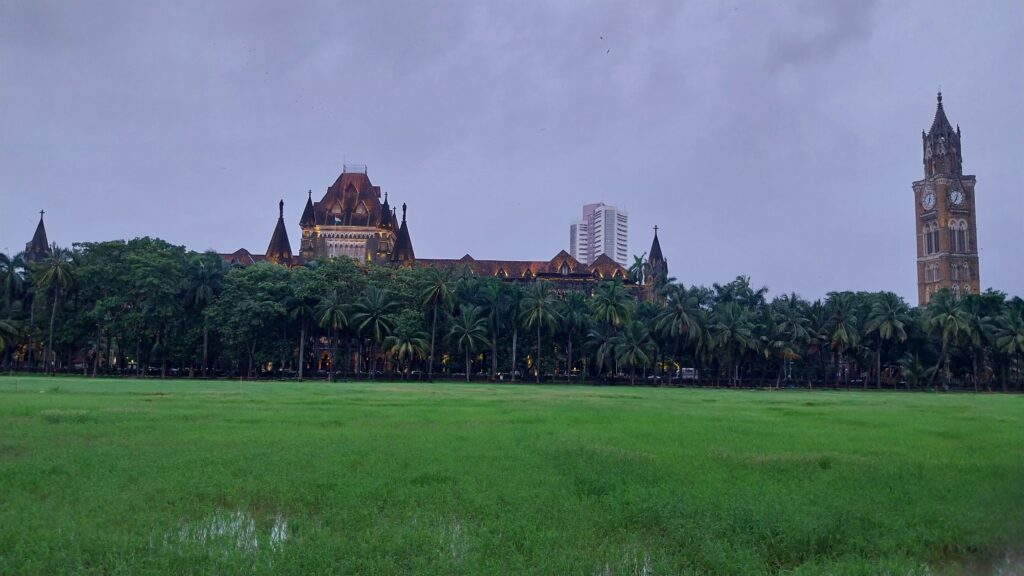
Photo then in 1890 and now
Premchand Roychand & Mother Rajabai: A Gift of Time
Driven by devotion to his mother Rajabai, Roychand proposed funding the construction of a clock tower connected to the University Library. His request, preserved in historical records, reflects both humility and affection:
“Sir, I have the honour to request that Government will do me the favour to offer to the University of Bombay, in the name of my good mother Rajabai, two lakhs of rupees for the erection of a Tower to contain a large clock and a set of joy-bells. If there be no architectural objections, I should like the tower to be in connection with the University Library.”
This donation — an impressive two lakh rupees, a princely sum for the era — was accepted, and the tower was constructed exactly as requested. In honour of his mother, the structure was named the Rajabai Tower.
Beyond philanthropy, the story carries deep cultural resonance. Rajabai, who was blind and deeply religious, is believed to have relied on the tower’s bells to mark the passage of time for her daily routines and prayers. This anecdote appears in many guidebooks and newspaper retellings but is not recorded in the University’s original archival account.
Sir George Gilbert Scott: The Architectural Mastermind
The design of the Rajabai Tower was entrusted to Sir George Gilbert Scott, one of Britain’s most celebrated architects and a leading figure of the Gothic Revival movement. Remarkably, Scott never visited India, yet his design reveals extraordinary sensitivity to local conditions.
Scott conceived the University buildings — including the Convocation Hall, Library, and Rajabai Clock Tower — in the neo-Gothic style, blending European aesthetics with climatic practicality. His design innovations included:
- Strategic ventilation to harness the cooling sea breeze
- Deep arcade verandahs for monsoon protection
- Structural adaptations for tropical weather
The execution of Scott’s design in Bombay was overseen by a distinguished team:
- Lt. Col. J. A. Fuller – Superintending Engineer
- Rao Bahadur Muckoond Ramchunder – Assistant Engineer
- Nagoo Sayaji – Contractor
- Messrs Paris and Molecey – Assistant Architects to the Bombay Government
Architectural Brilliance of Rajabai Tower
Designed in buff-coloured Kurla stone, the Rajabai Tower exemplifies Victorian craftsmanship. Its soaring vertical lines, pointed arches, decorative tracery, and stained glass elements capture the essence of Gothic Revival architecture.

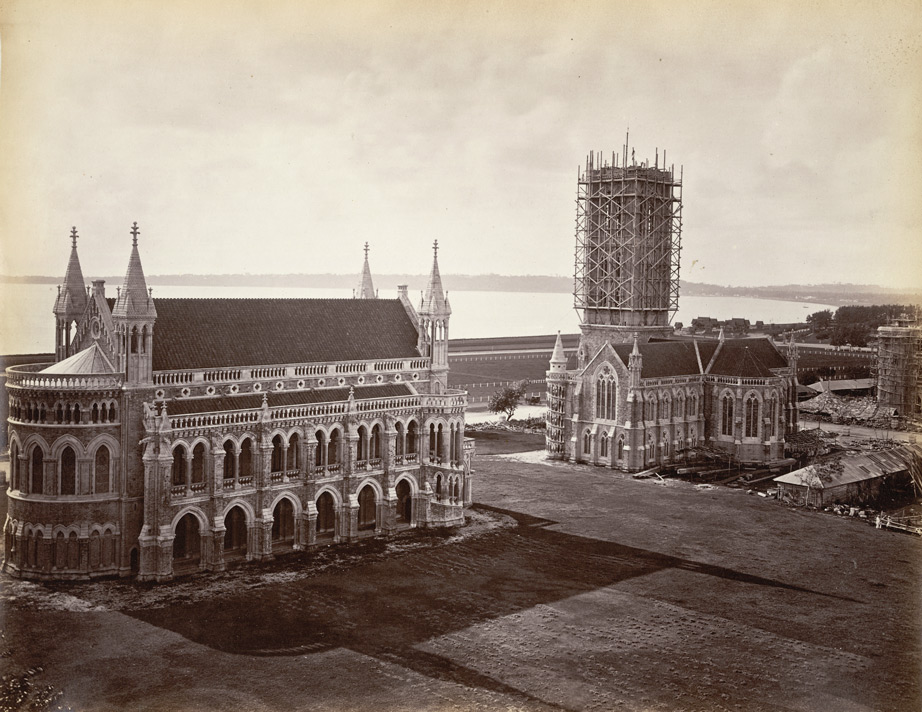
Above photo: Construction around 1873
Historically, the tower served both functional and symbolic purposes:
- Housing a large mechanical clock
- Featuring a set of bells audible across the precinct
- Acting as a visual anchor for the University complex
Upon its completion in November 1878, the tower ranked among the tallest and most visually commanding structures in Bombay.
Today, the Rajabai Tower stands as part of Mumbai’s globally recognised Victorian Gothic ensemble, contributing to the city’s UNESCO-listed heritage skyline. Despite the rapid modernisation surrounding it, the tower continues to evoke an era when architecture, climate-responsive design, and philanthropy intersected beautifully.
It remains a symbol of Mumbai’s layered history — where commerce, culture, devotion, and design converge.
Key Highlights:
- Location: University of Mumbai, Fort Campus, South Mumbai
- Construction Period: Tower was constructed between 1869 and 1878, with work commencing on 1 March 1869 and the tower reaching completion in November 1878.
- Philanthropist: Premchand Roychand, prominent Jain businessman & stockbroker
- Historic Donation: Premchand Roychand offered Rs. 2,00,000 in 1864 for a University library and a further Rs. 2,00,000 for an attached clock tower;
- Dedicated to: Rajabai, – Roychand’s mother
- Architect: Sir George Gilbert Scott (Gothic Revival pioneer)
- Style: Neo-Gothic / Victorian Gothic
- Design Features: Climate-responsive ventilation & monsoon-proof verandahs
- Function: Clock tower with bells
- Heritage Status: Part of Mumbai’s UNESCO-recognised heritage district
Watch The man who keeps Mumbai’s iconic 146-year-old clock ticking | BBC News India:
