


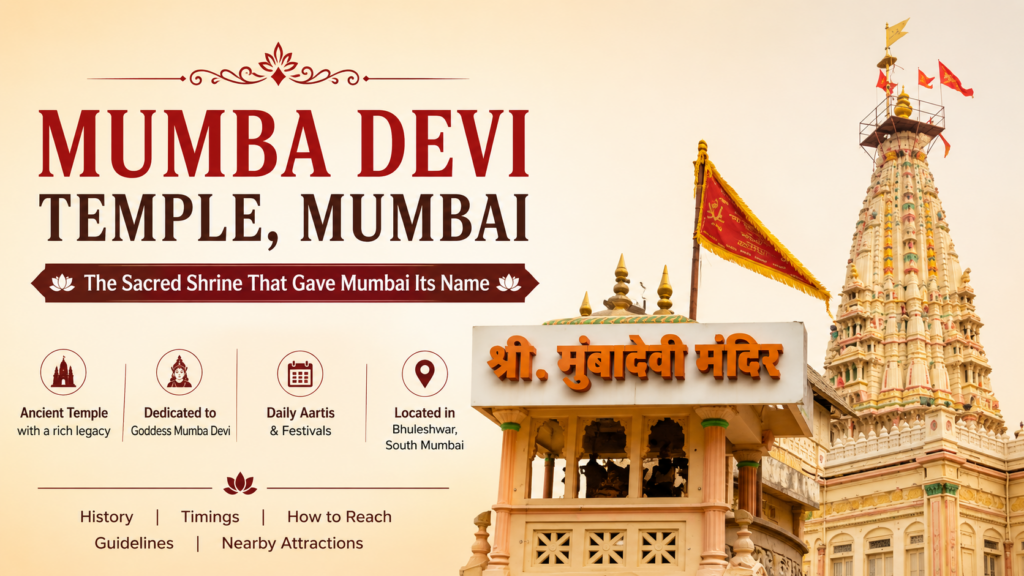
Nestled in the bustling lanes of Bhuleshwar near Zaveri Bazaar, Mumba Devi Temple is one of Mumbai’s oldest and most revered temples. More than just a place of worship, the temple holds a unique place in the city’s identity because Mumbai derives its name from Goddess Mumba Devi, the city’s patron deity.
Every day, thousands of devotees, traders, tourists, and spiritual seekers visit the temple to seek blessings from the goddess who has protected the region for centuries. Whether you are a devotee, a history enthusiast, or a traveler exploring South Mumbai, Mumba Devi Temple offers a fascinating blend of faith, culture, and heritage.
Quick Information
| Particulars | Details |
| Location | Bhuleshwar, Zaveri Bazaar, South Mumbai |
| Dedicated To | Goddess Mumba Devi (a form of Goddess Parvati) |
| Established | Original temple believed to have existed around the 17th century |
| Current Temple | Rebuilt at Bhuleshwar in 1737 |
| Entry Fee | Free |
| Best Time to Visit | Early morning or evening Aarti |
| Major Festival | Navratri |
| Photography | Restricted inside the sanctum |
| Nearest Railway Stations | Marine Lines, Charni Road, Masjid Bunder |
Why Is Mumba Devi Temple Important?
Mumba Devi is regarded as the guardian goddess of Mumbai and has been worshipped for centuries by the Koli fishing community, the original inhabitants of the seven islands that later became Mumbai.
The name “Mumbai” is believed to have originated from “Mumba Aai” (Mother Mumba), reflecting the deep connection between the goddess and the city itself. Even today, many local residents consider a visit to Mumba Devi Temple auspicious before starting a new business, purchasing property, or embarking on important life events.
History of Mumba Devi Temple
According to historical records and temple traditions, the original shrine was located near Bori Bunder, close to present-day Chhatrapati Shivaji Maharaj Terminus.
The temple is believed to have been built around 1675 and later reconstructed at its present location in Bhuleshwar in 1737. For centuries, the temple has remained a spiritual center for fishermen, traders, and residents of Mumbai.
As Mumbai developed into a major commercial hub, the temple continued to serve as a symbol of the city’s cultural and religious roots.
The Legend of Mumba Devi
Local legends identify Mumba Devi as an incarnation of Goddess Parvati. She is believed to have lived among fishermen and blessed the coastal communities with protection, prosperity, and courage.
Because of this association, the Koli community continues to regard her as their patron goddess. Over time, the reverence for Mumba Devi spread across communities, making her one of Mumbai’s most respected deities.
Also: See other Temples in Mumbai
Architecture and Idol
The temple may not be massive in size, but it possesses immense spiritual significance.
Highlights include:
- Beautiful traditional temple architecture
- Intricately carved entrance
- Black stone idol of Mumba Devi
- Silver crown and traditional ornaments adorning the deity
- Tiger statue placed before the sanctum, symbolizing the goddess’s power
- Shrines dedicated to Annapurna Devi and other deities within the complex
The atmosphere becomes especially vibrant during Aarti and festival celebrations.
Temple Timings
Darshan Timings
| Activity | Time |
| Temple Opens | 6:30 AM |
| Temple Closes | 9:00 PM |
| Darshan | 6:30 AM – 8:55 PM |
Daily Aarti Schedule
| Aarti | Time |
| Mangal Aarti | 6:30 AM |
| Main Morning Aarti | 9:30 AM |
| Naivaidya Aarti | 12:15 PM |
| Dhoop Aarti | 6:30 PM |
| Main Evening Aarti | 8:00 PM |
| Shayan Aarti | 8:50 PM |
Timings may vary during festivals and special occasions.
Major Festivals Celebrated
1. MAGH NAVRATRI – GUPT NAVRATRI
Starting From Magh Ekam (Pratipada) & Gets Over On Magh Navmi Day
2. MUMBADEVI VARDHAPAN DIN (PATOTSAV)
On Magh Ekadashi
3. CHAITRA NAVRATRI
Starting From Chaitra Ekam (Pratipada – Gudi Padwa) & Gets Over On Chaitra Navmi Day (Ram Navmi)
4. HANUMAN JAYANTI
On Chaitra Pornima
5. AASHAD NAVRATRI – GUPT NAVRATRI
Starting On Aashad Ekam (Pratipada) & Get Over On Aashad Navmi
6. SHREE KRISHNA JAYANTI – JANMASHTAMI
On Shravan Ashtami
7. ASHVIN NAVRATRI
Starting From Ashvin Ekam (Pratipada) & Gets Over On Ashvin Navmi Day
8. SHREE MUMBADEVI ANNAKUT MOHOTSAV
On Kartik Pratipada
9. NAVCHANDI YAGNYA
On Every Month Pornima Day
How to Reach Mumba Devi Temple
By Train
The nearest railway stations are:
- Marine Lines (Western Railway)
- Charni Road (Western Railway)
- Masjid Bunder (Central Railway)
From these stations, the temple can be reached by taxi, bus, or a short walk through the bustling markets of South Mumbai.
By Road: The temple is well connected by Mumbai’s road network. Taxis and app-based cabs can drop visitors near the entrance.
Visitor Guidelines:
To ensure a pleasant and respectful visit, keep the following points in mind:
Dress Modestly: Traditional or modest clothing is recommended.
Remove Footwear: Shoes and slippers must be removed before entering the temple premises.
Maintain Silence: Avoid loud conversations inside the temple complex.
Respect Religious Practices: Follow temple staff instructions and queue systems during darshan.
Photography Restrictions: Photography may not be permitted inside the sanctum. Always check current rules before taking pictures.
Keep Belongings Secure: The temple is located in a busy market area, so carry valuables carefully.
Visit Early: Early mornings provide a peaceful darshan experience with smaller crowds.
Best Time to Visit: The ideal months to visit are from October to March when Mumbai experiences relatively pleasant weather.
For devotees who wish to experience the temple at its most vibrant, Navratri is undoubtedly the best time to visit. However, be prepared for larger crowds during festival days.
Nearby Attractions
A visit to Mumba Devi Temple can be combined with several famous South Mumbai attractions:
- Crawford Market
- Zaveri Bazaar
- Bhuleshwar Market
- Marine Drive
- Chhatrapati Shivaji Maharaj Terminus
- Gateway of India
- Chhatrapati Shivaji Maharaj Vastu Sangrahalaya
These locations offer a perfect blend of history, shopping, architecture, and culture.
Also: See other Temples in Mumbai

