


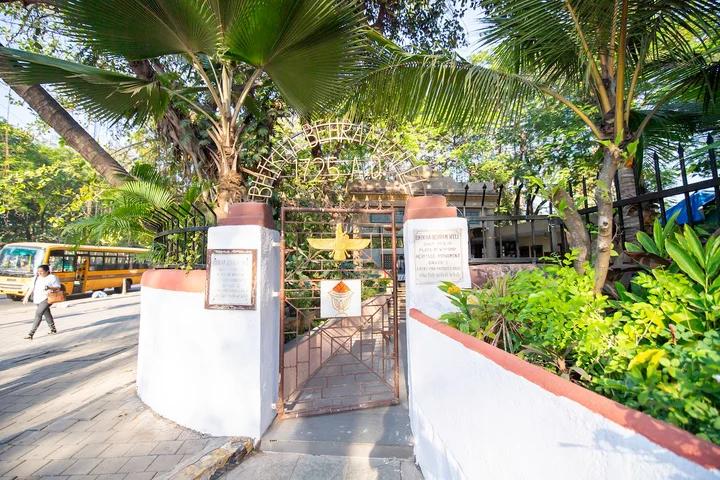
At the busy intersection of Veer Nariman Road and Bhaurao Patil Marg, near Churchgate in South Mumbai, stands a small but historically significant structure known as the Bhika Behram Well. Surrounded by the modern city and located close to BMC Garden, this old well is a reminder of Mumbai’s early history, when freshwater was an essential resource and public wells played an important role in everyday life.
Built in 1725, the well is associated with Bhikaji Behram Pandey, a Parsi philanthropist who is remembered for providing water to travellers. Today, it is also a sacred site for the Parsi community and a protected heritage structure.
History of the Well
The Bhika Behram Well was dug in 1725, when Bombay was still developing into the major commercial city it would later become. According to historical accounts, Bhikaji Behram Pandey, who had come from Bharuch in Gujarat, established the well to provide drinking water for travellers passing through the area.
At that time, people travelling by bullock carts and horse-drawn vehicles depended on accessible sources of freshwater. A well in a convenient location could therefore serve an important public purpose.
The well was not intended only for human use. A stone trough, known as a hawada, was also provided for animals. This reflects the practical importance of the structure in the daily life of eighteenth-century Bombay.
The well’s history is documented in Mumbai’s heritage records, which identify 1725 as its construction date. The same records note that the surrounding canopy is a later addition and that restoration work was undertaken in 2000.
A Source of Freshwater Near the Sea
One of the interesting features of the Bhika Behram Well is its freshwater source, despite its location relatively close to the Arabian Sea.
The well is situated in an area where groundwater quality has historically been affected by the proximity of the sea. Yet the water associated with this well has traditionally been regarded as sweet and suitable for drinking.
This characteristic has contributed to the well’s importance and the reverence it receives from the Parsi community. Historical accounts also describe the well as a source of water for workers and people in the surrounding area during the nineteenth and early twentieth centuries.
The existence of freshwater near the coast is not necessarily mysterious from a scientific perspective. Groundwater can remain fresh where natural recharge, underground geological formations and the movement of water help prevent seawater intrusion. However, the specific hydrogeological explanation for this well would require a detailed scientific investigation.

Religious and Cultural Significance
The Bhika Behram Well is particularly important to the Parsi community. In Zoroastrian tradition, water is regarded as sacred and is associated with purity and life.
The well is therefore more than an old source of drinking water. It is a place of religious significance where people come to offer prayers and show respect.
Its importance also reflects the broader contribution of the Parsi community to Mumbai’s development. Across the city, Parsi charitable institutions, public buildings and philanthropic works have played an important role in education, healthcare, public welfare and civic life.
The Bhika Behram Well is one of the smaller but enduring examples of this tradition of public service.
Architecture of the Well
The well itself is the oldest part of the structure, while the pavilion or canopy above it is a later addition.
The heritage listing describes the canopy as a structure built in the 1950s, with concrete construction and a surface finished to resemble yellow basalt stone. The site has also undergone restoration and refurbishment over the years.
The pavilion is particularly notable for its decorative elements, including stained-glass panels, stone carvings and ironwork. These features give the structure a distinctive appearance despite its relatively small size.
The combination of an old public well and a later ornamental canopy illustrates how historic structures in Mumbai have evolved over time while retaining their original purpose.
The Well During Mumbai’s Urban Development
During the nineteenth century, the area around the well became increasingly important as Bombay expanded.
Historical accounts associate the well with the development of nearby institutions, including the Bombay High Court and the University of Mumbai. The water was reportedly used by workers involved in the construction of important buildings in the surrounding area.
The well also served the nearby offices and residents. Water was reportedly carried from it by carts, showing how important local water sources remained even as the city developed.
These accounts provide an interesting connection between the well and Mumbai’s transformation from a colonial settlement into a major urban centre.
Heritage Protection
The Bhika Behram Well is included in Mumbai’s official heritage inventory.
The heritage listing identifies it as a Grade II-B heritage structure. This classification recognises its historical, cultural and religious importance and provides a basis for its preservation.
The well is also significant because it survives in an area that has undergone substantial urban transformation. Modern roads, offices and commercial buildings now surround the site, but the well continues to retain its identity.
In 2025, the well completed 300 years. The tricentenary was marked by celebrations within the Parsi community, including prayers and commemorative activities. The occasion highlighted the continuing importance of this small historic structure in the life of Mumbai.
Bhika Behram Well Today
Today, the Bhika Behram Well remains a recognised heritage landmark near Churchgate. It is located walkable distance from Churchgate station besides BMC Garden close and is surrounded by the busy streets of South Mumbai.
For many people passing through the area, the well may appear to be a small structure tucked away among the surrounding buildings. However, its history makes it an important part of Mumbai’s heritage.
The well is a reminder of the city’s earlier dependence on public water sources and the role of philanthropy in providing essential services. It also represents the enduring presence of the Parsi community in Mumbai.
For those interested in the city’s heritage, the well is a reminder that Mumbai’s history is not found only in grand buildings and monuments. Sometimes, it is preserved in a small structure that has quietly served the city for generations.
References
- Mumbai Metropolitan Region Heritage Conservation Society. Listing and Grading of Heritage Buildings and Precincts in Mumbai, Heritage Record No. 629: Bhika Behram Well.
https://www.mmrhcs.org.in/images/documents/projects/heritage-listning/06-Proforma-622-632_634.pdf - Free Press Journal. “Mumbai: Churchgate’s Bhikha Behram Well Gears Up For 300th Birthday With Revamp Plans.”
https://www.freepressjournal.in/mumbai/mumbai-churchgates-bhikha-behram-well-gears-up-for-300th-birthday-with-revamp-plans - Parsiana. “A Wellspring of Hope.”
https://www.parsiana.com/current-issue/articles.aspx?id=1zIbZs59eOw%3D&issue=928 - Architectural Digest India. “Mumbai’s Bhikha Behram Well, More Than Just a Sacred Site for Zoroastrians, Enters Its 300th Year.”
https://www.architecturaldigest.in/story/why-mumbais-300-year-old-bhikha-behram-well-is-more-than-just-a-sacred-site-for-zoroastrians-parsi-heritage-kirtida-unwalla-ad100-restoration/

